



Aja Monet is a powerful and uncompromising voice in contemporary poetry and music, known for blending spoken word with jazz and soul influences. Born in Brooklyn, New York, she emerged as a writer at a young age, using poetry as a tool to process the world around her. Her work reflects a deep commitment to truth-telling, often centering themes of identity, justice, and collective liberation.
From her early years, Monet demonstrated an extraordinary talent for language and expression. She gained national recognition after becoming the youngest winner of the Nuyorican Poets Cafe Grand Slam title, a milestone that marked her as a rising figure in the spoken word community. This achievement helped launch her career and introduced her voice to a broader audience.
Monet’s poetry is deeply rooted in the traditions of Black radical thought and feminist theory. She draws inspiration from historical movements and thinkers, weaving their influence into her own contemporary narratives. Her writing often explores the intersections of race, gender, and class, offering both critique and vision in equal measure.
In addition to her work on stage, Monet has published collections that showcase her literary range. Her book My Mother Was a Freedom Fighter stands as a testament to her ability to combine personal storytelling with political insight. Through vivid imagery and emotional honesty, she crafts poems that resonate on both an intimate and societal level.
Music plays a central role in Monet’s artistic expression. She frequently collaborates with musicians to create performances that merge poetry with live instrumentation, often incorporating jazz elements reminiscent of artists like Nina Simone. This fusion creates an immersive experience, allowing her words to move fluidly between speech and song.
Monet is also known for her activism, which is inseparable from her art. She has been involved in numerous social justice movements, using her platform to advocate for marginalized communities. Her performances often serve as spaces for reflection and resistance, encouraging audiences to engage critically with the world around them.
A defining feature of Monet’s work is its emotional depth. She writes with a vulnerability that invites listeners and readers into her inner world, while also connecting those personal experiences to broader collective struggles. This balance between the personal and the political gives her work a unique and compelling power.
Throughout her career, Monet has collaborated with a wide range of artists across disciplines. These collaborations highlight her versatility and her ability to adapt her voice to different creative contexts. Whether performing in intimate venues or large festivals, she maintains a strong sense of purpose and authenticity.
Monet’s performances are often described as transformative experiences. Her presence on stage is both commanding and intimate, drawing audiences into a shared emotional space. Through rhythm, tone, and pacing, she brings her poetry to life in a way that transcends the written word.
Education and community engagement are also central to Monet’s mission. She has participated in workshops and programs aimed at empowering young writers and activists, emphasizing the importance of storytelling as a tool for change. Her work in this area reflects her belief in the power of art to inspire action.
In recent years, Monet has continued to expand her artistic horizons, releasing projects that further integrate music and poetry. Her evolving sound demonstrates her willingness to experiment while staying grounded in her core themes. This evolution keeps her work dynamic and relevant.
Ultimately, Aja Monet represents a vital force in contemporary culture. Through her words, performances, and activism, she challenges audiences to confront injustice and imagine new possibilities. Her work stands as both a reflection of the present moment and a call toward a more just and compassionate future.



Education
Roots Of Defiant African Resistance
Mau Mau warriors remains one of the most powerful chapters in the history of African resistance against colonial rule.

The story of the Mau Mau warriors remains one of the most powerful chapters in the history of African resistance against colonial rule. Emerging in Kenya during the 1950s, the Mau Mau movement represented a fierce struggle for land, dignity, freedom, and cultural identity. Although colonial authorities often portrayed the movement as savage and criminal, many Kenyans viewed the fighters as freedom heroes willing to sacrifice everything for independence. Their revolt shook the foundations of British colonial power in East Africa and inspired anti-colonial movements around the world.
The roots of the Mau Mau uprising can be traced to decades of British colonial occupation in Kenya. Large portions of fertile land were taken from African communities, especially the Kikuyu people, and handed over to European settlers. Africans were pushed into crowded reserves, subjected to harsh labor conditions, and denied political representation. The growing inequality created bitterness and anger among those who watched their ancestral lands disappear under foreign control. Many young men and women began to believe that peaceful appeals would never end colonial oppression.
The Mau Mau movement formally began in the early 1950s, though resistance had been building for years beneath the surface. Secret oaths bound members together in loyalty and commitment to liberation. Forest camps became bases for guerrilla fighters who launched attacks against colonial forces and collaborators. The British government declared a state of emergency in 1952, fearing that the rebellion could spread throughout the colony. What followed was a brutal conflict marked by arrests, executions, torture, and military crackdowns.
One of the most iconic aspects associated with the Mau Mau warriors was their appearance, particularly their uncut and tangled hair. In many African traditions, hair carried spiritual and cultural meaning. For some fighters, growing their hair naturally symbolized rejection of European standards and a return to African identity. Colonial authorities often viewed this appearance as threatening and uncivilized, but to many Africans it represented resistance, pride, and freedom from colonial control.
The connection between the Mau Mau fighters and dreadlocks later became deeply influential in global Black consciousness movements. Although the term “dreadlocks” became more widely associated with Rastafarian culture in Jamaica, images of Kenyan freedom fighters with locked or matted hair circulated internationally. These images symbolized rebellion against white domination and cultural erasure. For many people of African descent, the hairstyle became more than fashion; it became a political and spiritual statement rooted in anti-colonial resistance.
The British colonial administration responded to the Mau Mau revolt with extreme force. Tens of thousands of Africans were detained in prison camps where abuse and forced labor were widespread. Villages were burned, suspects were tortured, and many innocent civilians suffered greatly during the conflict. Colonial propaganda attempted to paint the uprising as purely violent fanaticism while ignoring the injustices that gave birth to the rebellion. Decades later, historical research revealed the depth of the atrocities committed during the suppression campaign.
Among the most respected figures associated with the broader Kenyan independence struggle was Jomo Kenyatta. Although the British accused him of directing the Mau Mau movement, historians continue to debate the extent of his direct involvement. What is clear is that colonial authorities saw educated African leaders and militant resistance groups as interconnected threats to imperial rule. Kenyatta’s imprisonment turned him into a symbol of African nationalism and strengthened demands for independence.
The forests of Kenya became legendary battlegrounds during the uprising. Fighters lived under extremely difficult conditions while carrying out guerrilla operations against colonial troops. Leaders such as Dedan Kimathi emerged as symbols of courage and sacrifice. Kimathi, often photographed with long hair and military attire, embodied the image of uncompromising resistance. Even after his capture and execution by the British in 1957, his legacy continued to inspire generations seeking freedom and self-determination.
The Mau Mau revolt also had psychological importance far beyond Kenya. Across Africa and the Caribbean, oppressed people saw the rebellion as proof that colonial powers were not invincible. During the 1950s and 1960s, anti-colonial struggles spread across the African continent as nations demanded independence from European empires. The determination of Mau Mau fighters became part of a wider global awakening among colonized peoples who sought to reclaim their history, languages, and traditions.
Dreadlocks eventually evolved into a worldwide symbol of spiritual consciousness, African pride, and rebellion against oppression. In Jamaica, Rastafarians connected dreadlocks to biblical teachings, African identity, and resistance to Babylon, which represented corrupt systems of domination. Influential reggae artists later helped spread this imagery globally. Yet beneath the music and fashion remained echoes of earlier African resistance movements like the Mau Mau, where natural hair symbolized refusal to conform to colonial expectations.
In modern Kenya, the legacy of the Mau Mau movement continues to be reevaluated and honored. For many years after independence, discussions about the uprising remained politically sensitive. Over time, however, former fighters gained greater recognition for their sacrifices. Memorials, books, and documentaries now acknowledge the role the movement played in ending colonial rule. In 2013, the British government formally expressed regret and agreed to compensate some Kenyan survivors who suffered torture during the colonial emergency period.
The history of the Mau Mau warriors reminds the world that struggles for freedom are often deeply connected to cultural identity and self-expression. Their rebellion was not simply about politics or territory; it was also about reclaiming humanity after years of domination and humiliation. The symbolism of dreadlocks, natural appearance, and African pride became intertwined with their fight against colonialism. Today, the Mau Mau uprising stands as a lasting testament to the courage of people who refused to surrender their land, culture, and dignity to imperial power.
Entertainment
A Voice Rising With Purpose
Olivia Dean’s voice met that stillness without hesitation.

There are certain rooms that seem to anticipate what’s about to happen inside them.
This was one of those rooms.
By early evening, the space had settled into a low, knowing hum—conversations folding into one another, glasses catching the light, the air charged with something quieter than excitement but more precise than anticipation. It wasn’t simply that people had gathered; it was that they seemed to be waiting, whether they realized it or not, for a moment that had yet to announce itself.
Nothing about the scene felt overstated. The lighting was soft without being dim, the crowd engaged without being performative. Familiar faces moved through the room with an ease that suggested presence rather than visibility. No one seemed particularly concerned with being seen—only with being there.
At the center of that attention, though not obviously so, was a young artist whose presence carried a kind of quiet inevitability. She did not command the room so much as the room arranged itself around her. There was composure in the way she moved, but also something else—something earned. The sense that whatever was unfolding now had been in motion for far longer than this evening suggested.
When she stepped forward to perform, the shift was subtle but complete. Conversations didn’t stop so much as dissolve. The room recalibrated, its energy narrowing into a shared point of focus.
Her voice met that stillness without hesitation.
It was clear, controlled, and notably unforced—less a display than a transmission. There was precision in it, certainly, but also warmth, and something more difficult to manufacture: emotional accuracy. She wasn’t reaching for the moment; she was inside it. Each note felt considered without being calculated, as though the performance were unfolding in real time rather than being reproduced.
The effect was immediate, but not fleeting. What lingered wasn’t just the sound, but the sense of being addressed—of something honest having passed between performer and audience, however briefly.
Only days earlier, she had reached what might be considered a defining milestone, the kind that rearranges both visibility and expectation. She spoke about it carefully, almost cautiously, as though still negotiating its scale. There was no practiced narrative, no easy confidence in its permanence—only a kind of measured disbelief, paired with an awareness that something had shifted.
If anything, the moment seemed to have sharpened her attention rather than diffused it. There was no trace of fatigue in her performance, no sense of someone carried forward by momentum alone. Instead, she appeared deliberate—fully aware of where she was, and of how quickly moments like this can pass.
Earlier that day, in a hotel suite overlooking the city, that same awareness took on a quieter form. Removed from the structure of an audience, she moved through the space with a kind of intentional calm. The room itself was understated—soft light, minimal noise, small details arranged with care—but it reflected something essential about her approach: an understanding that environment shapes experience.
Nothing felt incidental. Not the pacing of the day, not the way she prepared, not even the pauses between conversations.
Her personal style echoed that restraint. It was expressive, but not declarative—assembled with a sense of clarity rather than urgency. There was no visible negotiation with trend, no overt signaling. Instead, it read as self-contained, consistent, and—perhaps most notably—unforced.
In conversation, she was similarly precise. She listened closely, answered without rushing, and allowed silence to exist without filling it unnecessarily. It gave her interactions a certain weight, as though each exchange mattered on its own terms.
When the subject turned to celebration, she resisted the expected framing. There was humor in her response, but also deflection—a quiet redirection away from individual recognition and toward something more collective. It was not modesty in the performative sense, but perspective.
That perspective has been shaped over time. Her trajectory, by her own account, has been less about sudden arrival than sustained development—an accumulation of effort that, in retrospect, appears seamless but in practice required discipline, patience, and a tolerance for uncertainty.
It is a sensibility that carries into her music.
Her work resists excess. Where others might amplify, she refines. The songs unfold deliberately, favoring emotional specificity over broad declaration. Themes of self-worth, intimacy, and personal growth are present, but rarely overstated. Instead, they are explored with a kind of measured clarity, allowing complexity to remain intact.
In an industry that often rewards immediacy, this restraint feels notable. It invites attention rather than demanding it, creating space for listeners to engage at their own pace.
That engagement, she suggests, is the point.
Success, as she defines it, is less about scale than about connection—the ability to reach someone in a way that feels lasting rather than momentary. It’s a distinction that becomes most visible in her live performances, where the separation between artist and audience seems, if only briefly, to dissolve.
Even as her visibility expands, she has become more deliberate about what she allows in. Distance—from digital noise, from constant access—is not withdrawal, but maintenance. A way of preserving clarity in an environment that rarely encourages it.
She is also acutely aware of the narratives imposed on artists, particularly women, and the ease with which identity can be reshaped by external expectation. Her response is neither confrontational nor accommodating. Instead, it is quietly firm: a refusal to be defined by anything other than her own terms.
Those terms extend beyond the work itself. Conversations around accessibility and fairness are not, for her, abstract. They are practical considerations—extensions of a broader belief that success does not exist in isolation.
It’s a perspective rooted, she notes, in her upbringing, and in the influence of women whose resilience informed her understanding of both ambition and responsibility. Their impact is evident not in overt references, but in the structure of her thinking—the emphasis on consistency, on preparation, on showing up whether or not the outcome is guaranteed.
Looking ahead, her ambitions are clear, but notably measured. Growth, in her framing, is not expansion for its own sake, but alignment—an ongoing effort to ensure that what comes next remains connected to what brought her here.
On stage, that alignment becomes visible.
It is where instinct meets preparation, where control gives way to something more fluid. The confidence she carries there does not read as sudden or situational, but as cumulative—the result of repetition, refinement, and time.
Watching her, the impression is not of performance as construction, but of expression as continuation. There is a freedom in it, but one that feels structured rather than accidental—a choice, made repeatedly, to remain open within a space that often rewards the opposite.
Joy, she explains, operates in much the same way. Not as a byproduct, but as a decision—something she returns to with intention, particularly when it would be easier not to.
It is, in its own way, a discipline.
And it speaks to what ultimately defines her: not the scale of her recognition, but the consistency of her presence within it. The sense that, regardless of context, she remains fundamentally unchanged in the ways that matter.
In a moment increasingly shaped by visibility, that kind of steadiness feels less like an accessory—and more like the work itself.
Education
Poetry At The Cosmic Edge
The article profiles theoretical cosmologist Chanda Prescod-Weinstein as she launches her second popular science book…

The article profiles theoretical cosmologist Chanda Prescod-Weinstein as she launches her second popular science book, “The Edge of Space-Time: Particles, Poetry, and the Cosmic Dream Boogie,” a work that shifts away from the pain and injustice foregrounded in her first book toward a more playful exploration of why she fell in love with physics. It frames the new book as both a return to her original dream for her writing and a declaration that understanding the universe is a human cultural project, not just a technical one.
Her acclaimed debut, “The Disordered Cosmos,” intertwined dark matter and spacetime with stories of racism, marginalization and “dreams deferred” in the scientific community. In public remarks, she has since described that first book itself as a deferred dream, saying it was not the book she initially imagined writing, even as it chronicled the ways her scientific ambitions were delayed by structural inequities.
The new book, by contrast, is described as a reclamation: less about harm and more about joy, curiosity and wonder. She positions it as a cosmic pilgrimage back to the big questions that drew her into physics as a child, insisting that telling the universe’s story is a responsibility we share as humans, not a privilege reserved for experts in lab coats.
Prescod-Weinstein foregrounds poetry as a central influence, noting that verse shaped her imagination before equations did. She cites children’s rhymes and nonsense limericks alongside Adrienne Rich and Langston Hughes, explaining that these writers helped her see equations themselves as a kind of sentence and physics as an ongoing act of storytelling in specialized language.
For her, poetry is not an ornament but an operating principle: it is how she links new scientific ideas to lived experience. She argues that if cosmologists stop justifying their work in terms of practical payoffs and instead embrace curiosity as a cultural value, their vocation begins to look much closer to that of poets than of engineers selling products.
Throughout the book she leans on Alice’s adventures in Wonderland as another key metaphorical through-line. Serving as a science adviser on a fantasy series helped her rediscover a playful sensibility she says physics often squeezes out of Black queer scientists, and she wanted her text to feel whimsical in the same way that quantum ideas — like particles having “spin” without literally spinning — already sound like nonsense until you accept that this is, in fact, how reality behaves.
Prescod-Weinstein also scrutinizes the metaphors that physicists themselves take for granted, such as calling spacetime a “fabric” or talking about electromagnetic “fields.” Instead of beginning with the usual historical anecdotes, she invites readers to pause over those words and ask what we really mean by “space” and “space-time,” allowing questions that are usually shuffled off to philosophy to re-enter physics as legitimate lines of inquiry.
A recurring motif is the “edge”: the edge of the observable universe, the edge of scientific knowledge and the experience of living at the edge of dominant cultural identities. In contrast to her earlier focus on looking from the margins toward the center, she says this new work centers the margin itself, weaving in her fandoms — the Dodgers, “Alice in Wonderland,” “Star Trek” — as constitutive elements of her physics rather than distractions from it.
She illustrates how culturally specific metaphors can both welcome and exclude, offering an example where she likens black holes to “the best laid edges in the universe,” a phrase that doubles as a nod to Black hairstyling. She is clear that the sentence must still make sense to readers who miss the reference, but she relishes the small in-group recognition it offers to those for whom “laying edges” is a familiar practice, insisting that they too deserve to see themselves reflected in a physics text.
The interview also confronts how Black students are taught to contort themselves to fit a narrow image of who counts as a physicist. She notes that science is widely coded as white and that Black physicists are expected to assimilate to the culture of physics, rather than expecting the discipline to expand to include their cultural references, tastes and ways of speaking.
To push back, she reads a rap track, Big K.R.I.T.’s “My Sub Pt. 3 (Big Bang),” as a physics parable in which miswired subwoofers and fried cables become an impromptu lesson in grounding and cosmology. She argues that such stories show how people who wire cars and build sound systems are already engaging in scientific thinking, and that scientific meaning can coexist with, rather than overwrite, the song’s cultural significance.
Prescod-Weinstein is careful to lower the bar that many readers set for themselves when approaching popular physics books. She stresses that her aim is not to turn anyone into an expert but to invite them to wander through physics, treat its oddities as “tidbits” to savor and feel entitled to dwell with the math even if it scares them.
In one of the interview’s most pointed links between science and politics, she highlights neutrinos, which in the standard model shift among three “flavors,” as a natural example of what she calls “non-trinary” behavior. She suggests that this aspect of fundamental physics stands as a quiet rebuke to contemporary anti-trans rhetoric that insists people must always remain one fixed thing, offering her book as a modest source of hope and a reminder, echoing her mother, that the universe’s vastness dwarfs the harms people inflict on one another.
Culture
Blues Vision Across Every Border
Taj Mahal, on the verge of turning 84, treats music as a daily calling rather than a career phase, insisting he could easily make “an album a day” if freed from economic pressure.
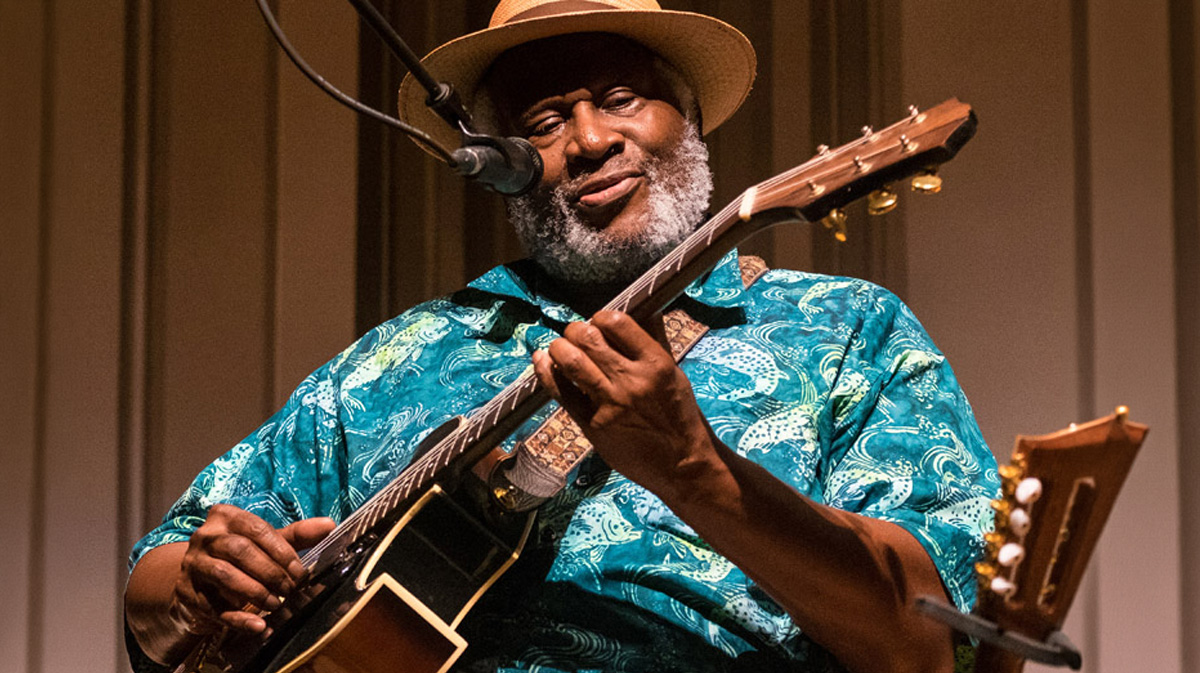
Taj Mahal, on the verge of turning 84, treats music as a daily calling rather than a career phase, insisting he could easily make “an album a day” if freed from economic pressure. His outlook underlines an artist who refuses to slow down, seeing his late life not as a winding down but as the most expansive stretch of his creative path.
From the start, he has rooted himself in the blues while insisting that this music is inseparable from a global story of people, movement and exchange. He describes blues as an enduring collision between West and East in the Mississippi Delta, something you can never “chew all the flavor out of,” positioning it as a permanent fact of life rather than a retro style.
Mahal’s vision of the blues has never been museum-bound; it has always been diasporic, reaching toward India, Hawaii, Jamaica, Mali, Zanzibar and beyond. “My sweep is global,” he says, a simple phrase that explains decades of collaborations in which he treats every culture touched by Africa as part of his extended musical family.
The article situates him back in Greenwich Village, near where the young Henry St. Clair Fredericks Jr. hitched in from Massachusetts with a guitar and a thumb, soaking up the 1960s folk revival. Now, dressed in an African-style suit, cap, bandanna and shades, he embodies a continuity between that era’s experimentation and his current, still-restless approach.
His new album, “Time,” recorded with his longtime Phantom Blues Band, becomes the latest chapter in this ongoing journey. Built around a previously unreleased Bill Withers song that reassures “time will see you through,” the record swirls blues, Memphis soul, salsa, reggae with Ziggy Marley, and especially New Orleans R&B into a relaxed, good-time blend.
Mahal uses Withers’s story to critique the way corporations tried to meddle with an already successful artist, demanding background singers, synths and trend-chasing arrangements. He admires Withers’s refusal to bow to those pressures, seeing a cautionary tale about how non-musicians try to dictate the sound of music.
Even as he promotes “Time,” Mahal is looking backward and forward at once, preparing an expanded reissue of his 1999 album “Kulanjan,” made with Toumani Diabaté and Malian musicians. That project, which braided his blues with West African griot traditions, felt to him like closing a 500-year loop, returning borrowed musical elements to their ancestral home and hearing them instantly recognized.
The piece also traces the origins of his global ear to his own household and neighborhood in Springfield, Massachusetts. Caribbean and Southern Black influences mingled with Jewish, Armenian, Polish and Sicilian neighbors, while his father’s shortwave radio opened a portal to Hawaiian slide guitar that filled “every single molecule” of his being.
College at the University of Massachusetts widened that horizon further, introducing him to the voice of Egyptian icon Umm Kulthum and to the idea that a vast “musical aquifer” existed beyond record company categories. Moving to California to work with a teenage Ry Cooder, he soon landed at Columbia Records, where he pushed past straight revivalism with bold gestures like four-tuba horn sections and reimagined pop tunes.
When major labels and Mahal parted ways by the late 1970s, he simply reoriented rather than retreated. He built a sprawling catalog on independent and international labels and sustained himself on the road like a modern griot, crisscrossing some 85 countries without relying on radio hits.
Along the way he has juggled countless ensembles and ideas: solo shows on multiple instruments, small groups, Hawaiian Hula Blues, a swing band, an International Rhythm Band, and even unreleased tracks with rappers. His partnership with Keb Mo’ as TajMo, which Keb describes as a master-disciple relationship, shows how Mahal’s example offered younger musicians an entirely different road into blues and roots music.
The article frames Mahal’s work as implicitly political, even when his songs avoid explicit protest. For him, simply doing what he does—centering African roots, honoring colonized and Indigenous peoples, and insisting that the blues’ Black, diasporic history cannot be erased—is a statement in itself.
In conversation with producer Narada Michael Walden, Mahal distills his philosophy into a daily discipline: if you are lucky enough to arrive on this planet as a musician, you owe it to humanity to build something every day. At 83, he still considers that ongoing work a profound blessing, proof that “time” has not slowed his sweep but only broadened its reach.
Video
Nkosazana Daughter’s Rising Musical Journey
Nkosazana Daughter has become one of the most recognizable voices in modern South African music.
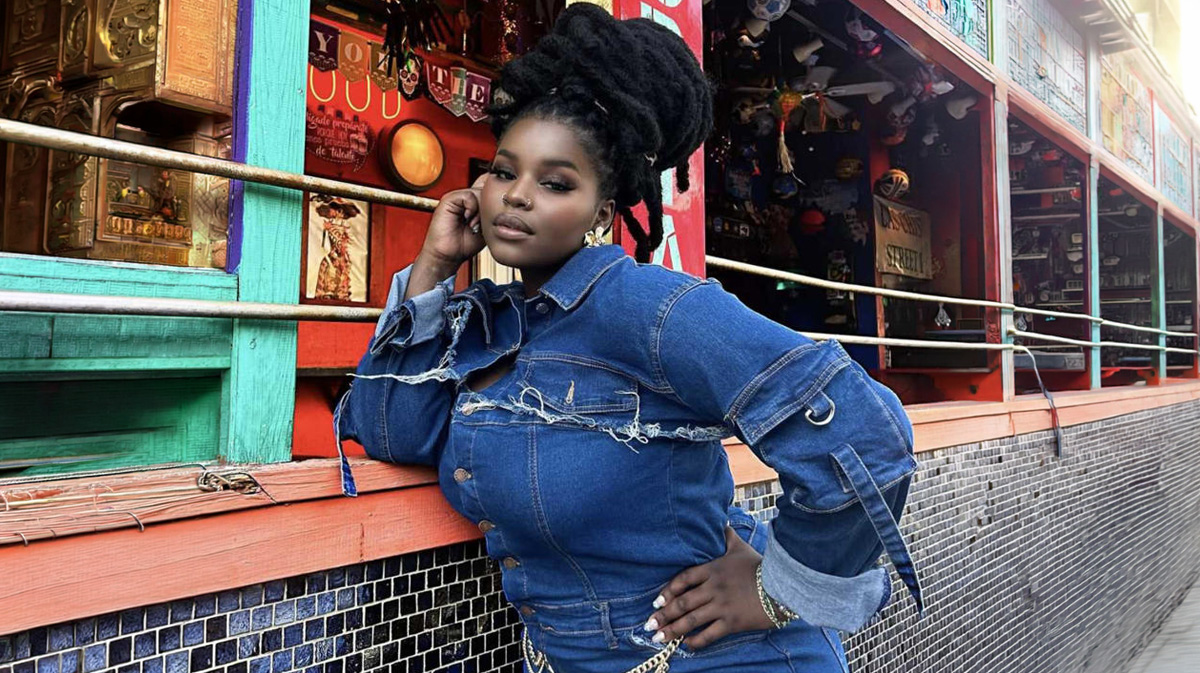
Nkosazana Daughter has become one of the most recognizable voices in modern South African music. Emerging during the explosive rise of amapiano, she quickly distinguished herself through her emotional vocals, spiritual melodies, and deeply expressive performances. Her music blends rhythm and soul in a way that resonates across generations, making her a standout figure in the evolving African music scene.
Born and raised in South Africa, Nkosazana Daughter grew up surrounded by rich musical traditions that influenced her artistic identity. Gospel harmonies, township sounds, and contemporary house music all played a role in shaping her vocal style. Her upbringing exposed her to music not simply as entertainment, but as a form of storytelling and emotional connection.
The rise of amapiano created the perfect environment for her talents to flourish. Amapiano, known for its jazzy piano melodies, deep basslines, and hypnotic percussion, became one of Africa’s most influential musical exports. Nkosazana Daughter entered the genre at a time when listeners were searching for singers capable of adding warmth and depth to instrumental-heavy tracks, and her voice immediately filled that space.
One of the reasons audiences gravitated toward her was the spiritual quality of her singing. Rather than relying on aggressive vocal delivery, she embraced softness, harmony, and emotional vulnerability. Her songs often feel meditative, carrying themes of love, struggle, hope, and healing. This approach allowed her music to connect deeply with listeners both inside and outside South Africa.
Her collaborations with major amapiano producers significantly expanded her reach. Working alongside influential artists and DJs helped introduce her voice to millions of fans throughout Africa and beyond. Tracks featuring her vocals became staples at clubs, parties, and social gatherings, while also finding popularity on streaming platforms and radio stations.
Nkosazana Daughter’s success also reflects the growing international appreciation for African music. Over the past decade, artists from South Africa, Nigeria, and other African nations have reshaped global popular culture. Amapiano, in particular, has spread rapidly across Europe, North America, and the Caribbean. Her music became part of this global movement, helping showcase South African creativity to new audiences.
Despite her growing fame, many fans appreciate the humility and calmness she projects publicly. Unlike some performers who rely heavily on controversy or spectacle, Nkosazana Daughter often allows the music itself to remain the central focus. Her reserved image has strengthened her reputation as an artist grounded in authenticity rather than celebrity theatrics.
Her vocal style is especially notable because it balances technical ability with emotional honesty. She does not merely sing notes; she conveys feeling through tone and phrasing. Many listeners describe her music as comforting, reflective, and emotionally restorative. In an era dominated by fast-paced digital trends, her music offers moments of emotional stillness.
Fashion and visual presentation have also become part of her artistic identity. Like many modern African artists, she blends contemporary style with cultural influences, presenting herself in ways that celebrate African beauty and individuality. Music videos and stage performances often highlight elegance, confidence, and creative self-expression.
Nkosazana Daughter’s rise has also inspired many young women interested in entering the music industry. The amapiano scene, while highly collaborative, has historically been dominated by producers and DJs. Her success demonstrated that female vocalists could become central figures within the genre and command international attention through talent and consistency.
As streaming platforms continue to connect artists to global audiences, her influence is likely to expand even further. Fans around the world increasingly seek music that feels emotionally genuine and culturally distinct. Nkosazana Daughter represents both qualities, combining modern production with deeply human storytelling through song.
Today, Nkosazana Daughter stands as one of the defining voices of contemporary amapiano music. Her journey reflects the broader rise of African artistry on the world stage and the power of music to transcend borders. Through sincerity, collaboration, and unmistakable vocal talent, she has helped shape the sound of a new musical era.

Sada Mire has become one of the most important voices in modern African archaeology and cultural preservation. Known for her groundbreaking work in the Horn of Africa, she has dedicated her career to protecting history, language, memory, and identity in regions often overshadowed by war and political instability. Through her research, lectures, and humanitarian efforts, she has shown that archaeology is not simply about studying ancient ruins, but about understanding humanity itself.
Born in Somalia and later displaced by civil conflict, Mire’s personal journey deeply shaped her academic mission. After fleeing the violence that engulfed Somalia during the early 1990s, she eventually settled in Sweden, where she continued her education and developed an interest in archaeology and cultural history. Her life experience gave her a unique perspective on how war can destroy not only lives, but also the stories and cultural foundations that define a people.
Mire later pursued advanced academic studies in archaeology and heritage studies in the United Kingdom, eventually earning a doctorate from University College London. Her academic training combined scientific archaeology with anthropology, oral traditions, and indigenous knowledge systems. Rather than separating modern communities from ancient history, she emphasized the living connection between people and their ancestral heritage.
One of Mire’s greatest achievements has been her work documenting and preserving archaeological sites in Somaliland and the broader Horn of Africa. Working with local communities and researchers, she helped identify and study ancient rock art sites, burial grounds, and sacred landscapes that had been largely ignored by international scholarship. Her discoveries revealed that the region possesses a rich and sophisticated cultural history stretching back thousands of years.
Among her most celebrated discoveries was the documentation of the Dhambalin rock art site in Somaliland. The paintings found there contain images of cattle, animals, and human figures believed to be several thousand years old. These discoveries challenged outdated stereotypes about African history and demonstrated the depth of civilization and artistic expression in the Horn of Africa long before colonial contact.
As a scholar associated with Leiden University, Mire expanded her influence into global academic circles. During her time there, she taught and promoted research on endangered heritage, cultural destruction, and archaeology in conflict zones. She also became known internationally through educational programs and public lectures that connected archaeology with modern humanitarian concerns.
Mire strongly believes that cultural heritage is a basic human need. This idea became central to her academic philosophy and public advocacy. She argues that when communities lose their monuments, stories, sacred spaces, and historical memory, they also lose part of their identity and emotional stability. In regions affected by conflict, preserving heritage can therefore become an act of healing and resistance.
Her work also emphasizes the importance of indigenous knowledge. Instead of relying entirely on Western interpretations of African history, Mire listens carefully to local oral traditions, folklore, and community memory. She has repeatedly argued that local populations should not merely be subjects of research, but active participants in preserving and interpreting their own cultural heritage. This approach has helped reshape discussions within archaeology and museum studies.
Beyond academia, Mire has worked tirelessly as a humanitarian and cultural advocate. She founded organizations dedicated to preserving Somali heritage and promoting education, tourism, and community development. Her projects often combine archaeology with technology, digital archives, and educational outreach so that younger generations can reconnect with their cultural history despite displacement and conflict.
Mire has also become a respected international public intellectual. Through documentaries, interviews, TED-style talks, and major media appearances, she has brought attention to the destruction of cultural sites across Africa and the Middle East. Her voice has helped audiences understand that attacks on cultural heritage are often attacks on identity, dignity, and collective memory itself.
Another remarkable aspect of her career is her focus on peace and unity. Mire has explored how archaeology can reveal long periods of coexistence and cooperation among different religious and ethnic groups in the Horn of Africa. By studying ancient societies, she encourages people to move beyond modern divisions and rediscover histories of connection, trade, spirituality, and shared humanity.
Sada Mire represents a powerful combination of scholar, humanitarian, educator, and cultural guardian. Her work reminds the world that preserving the past is not an academic luxury, but a vital part of protecting human identity and dignity. Through her leadership and vision, she has helped ensure that the voices, histories, and memories of the Horn of Africa will continue to inspire future generations.


Roots Of Defiant African Resistance

A Voice Rising With Purpose

Poetry At The Cosmic Edge







-

 Sports9 months ago
Grace, Grit, Gold on Ice
-

 Entertainment8 months ago
Serena Williams Super Bowl LX Commercial ‘Healthier on Ro’
-

 Fashion8 months ago
The Face That Redefined Beauty
-

 Business8 months ago
Curl Fest is Back
-

 Culture7 months ago
The Return of Chrisette Michele
-
 Culture8 months ago
Patterns of Systemic Black Destabilization
-
 Business9 years ago
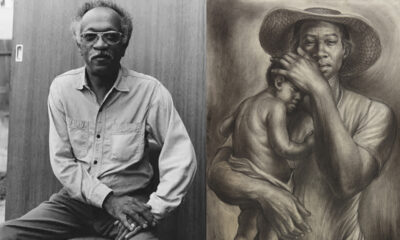
Charles White: Art and Human Dignity
-

 Fashion7 months ago
Bold Spatial Vision