


Education
AI Impact on Black Communities

Artificial intelligence is rapidly transforming nearly every aspect of modern life, from healthcare and education to employment and criminal justice. For Black communities in the United States, this technological shift brings both new opportunities and serious concerns. While AI has the potential to expand access and efficiency, it also risks reinforcing long-standing inequalities if not developed and implemented thoughtfully.
At its core, AI refers to systems that can analyze data, recognize patterns, and make decisions with minimal human intervention. These systems are increasingly embedded in everyday tools, shaping outcomes in ways that are often invisible to the public. Understanding how these systems work—and who designs them—is critical when examining their impact on marginalized communities.
Historically, Black Americans have faced systemic barriers in areas such as housing, employment, and education. These inequalities are often reflected in the data used to train AI systems. Because AI learns from past patterns, it can unintentionally replicate the same biases that have disadvantaged Black communities for generations.
One of the most widely discussed concerns is algorithmic bias. This occurs when AI systems produce outcomes that disproportionately harm certain groups. In hiring, for example, automated screening tools may favor candidates whose backgrounds resemble those already in the workforce, indirectly disadvantaging Black applicants.
In the criminal justice system, AI tools are used for risk assessments, policing strategies, and surveillance. These technologies can amplify existing disparities if they rely on biased data, leading to disproportionate targeting of Black communities. This raises serious ethical questions about fairness, accountability, and transparency.
Facial recognition technology is another area of concern. Studies have shown that these systems are often less accurate when identifying darker-skinned individuals. This can lead to misidentification and wrongful accusations, highlighting the need for improved accuracy and regulation.
Despite these challenges, AI also offers opportunities for positive change. In healthcare, AI-driven tools can help identify patterns in disease and improve early diagnosis. If designed inclusively, these systems could help address disparities in health outcomes that affect Black communities.
Education is another area where AI can play a transformative role. Personalized learning platforms can adapt to individual student needs, potentially helping to close achievement gaps. However, access to these technologies remains uneven, and ensuring equitable distribution is essential.
Economic opportunity is a key consideration in discussions about AI. As automation reshapes the job market, there is concern that Black workers may be disproportionately affected, particularly in industries vulnerable to automation. At the same time, AI-related fields offer new career paths that could provide economic mobility.
Increasing representation in the tech industry is crucial. When diverse voices are involved in designing AI systems, the likelihood of biased outcomes decreases. Encouraging more Black professionals to enter fields like data science and machine learning can help create more equitable technologies.
Community-based initiatives are already working to bridge this gap. Organizations focused on digital equity and tech education are providing training and resources to underserved communities. These efforts aim to ensure that Black communities are not only consumers of technology but also creators.
Policy and regulation will play a major role in shaping the future of AI. Governments and institutions must establish guidelines that promote fairness and accountability. This includes addressing issues such as data privacy, transparency, and the ethical use of AI.
Public awareness is equally important. Many people are unaware of how AI influences their daily lives. Increasing understanding can empower individuals to advocate for fairer systems and demand greater accountability from developers and policymakers.
There is also a growing movement among researchers and activists to address bias in AI. These efforts focus on improving data quality, developing fairer algorithms, and creating frameworks for ethical AI development. Collaboration across disciplines is essential for meaningful progress.
Cultural perspectives should not be overlooked in discussions about AI. Technology is not neutral; it reflects the values and assumptions of its creators. Incorporating diverse cultural viewpoints can lead to more inclusive and effective solutions.
Entrepreneurship within Black communities is another promising area. Black-owned tech startups are beginning to emerge, bringing innovative ideas and perspectives to the field. Supporting these ventures can help diversify the tech ecosystem.
Access to capital remains a significant barrier for many Black entrepreneurs. Addressing this issue will require targeted investment and support from both public and private sectors. Expanding funding opportunities can help unlock the full potential of innovation within these communities.
Digital literacy is a foundational component of AI equity. Ensuring that individuals understand how to use and navigate technology is essential for participation in a digital economy. Educational programs that focus on these skills can have long-term benefits.
The role of historically Black colleges and universities (HBCUs) is particularly important. These institutions have long been centers of excellence and opportunity. Expanding AI-related programs at HBCUs can help cultivate the next generation of leaders in technology.
Collaboration between academia, industry, and community organizations can accelerate progress. By working together, these groups can develop solutions that are both innovative and inclusive. Partnerships can also help ensure that research translates into real-world impact.
Ethical considerations must remain at the forefront of AI development. Questions about who benefits, who is harmed, and who has a voice in decision-making are critical. Addressing these issues requires ongoing dialogue and commitment.
Looking ahead, the relationship between AI and Black communities will continue to evolve. The choices made today will shape the outcomes of tomorrow. Ensuring that these choices are guided by principles of equity and inclusion is essential.
Ultimately, AI is a tool, and its impact depends on how it is used. With intentional design, inclusive participation, and strong accountability, it has the potential to support progress rather than perpetuate inequality.

Education
Roots Of Defiant African Resistance
Mau Mau warriors remains one of the most powerful chapters in the history of African resistance against colonial rule.
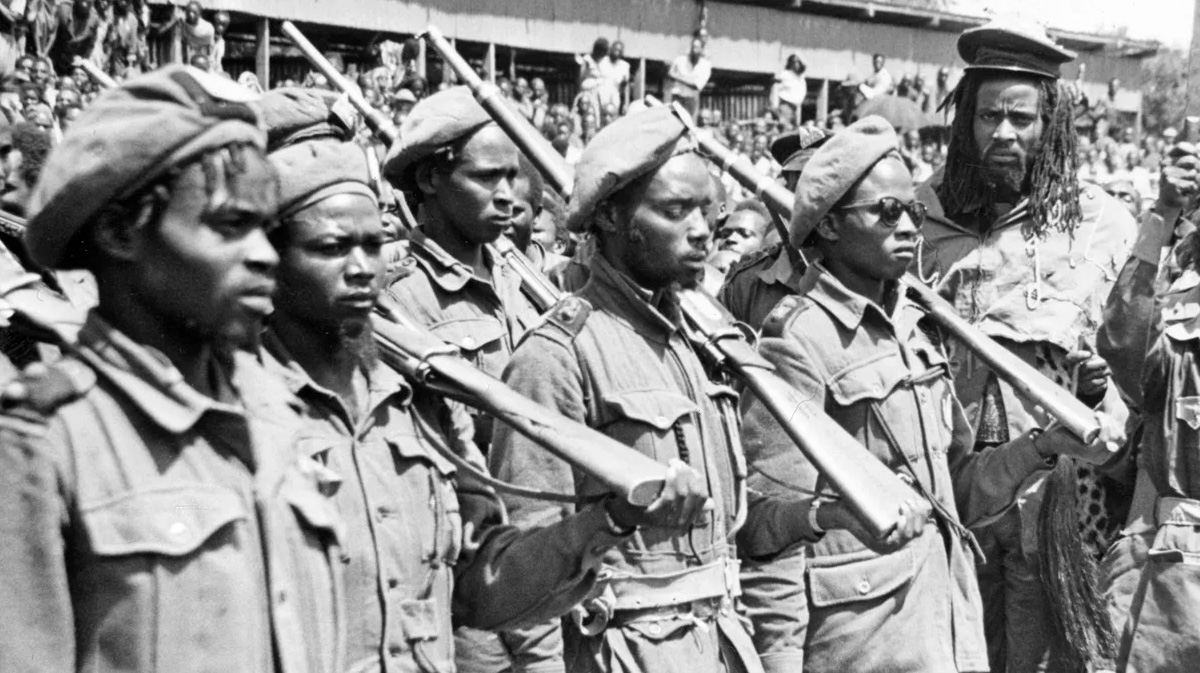
The story of the Mau Mau warriors remains one of the most powerful chapters in the history of African resistance against colonial rule. Emerging in Kenya during the 1950s, the Mau Mau movement represented a fierce struggle for land, dignity, freedom, and cultural identity. Although colonial authorities often portrayed the movement as savage and criminal, many Kenyans viewed the fighters as freedom heroes willing to sacrifice everything for independence. Their revolt shook the foundations of British colonial power in East Africa and inspired anti-colonial movements around the world.
The roots of the Mau Mau uprising can be traced to decades of British colonial occupation in Kenya. Large portions of fertile land were taken from African communities, especially the Kikuyu people, and handed over to European settlers. Africans were pushed into crowded reserves, subjected to harsh labor conditions, and denied political representation. The growing inequality created bitterness and anger among those who watched their ancestral lands disappear under foreign control. Many young men and women began to believe that peaceful appeals would never end colonial oppression.
The Mau Mau movement formally began in the early 1950s, though resistance had been building for years beneath the surface. Secret oaths bound members together in loyalty and commitment to liberation. Forest camps became bases for guerrilla fighters who launched attacks against colonial forces and collaborators. The British government declared a state of emergency in 1952, fearing that the rebellion could spread throughout the colony. What followed was a brutal conflict marked by arrests, executions, torture, and military crackdowns.
One of the most iconic aspects associated with the Mau Mau warriors was their appearance, particularly their uncut and tangled hair. In many African traditions, hair carried spiritual and cultural meaning. For some fighters, growing their hair naturally symbolized rejection of European standards and a return to African identity. Colonial authorities often viewed this appearance as threatening and uncivilized, but to many Africans it represented resistance, pride, and freedom from colonial control.
The connection between the Mau Mau fighters and dreadlocks later became deeply influential in global Black consciousness movements. Although the term “dreadlocks” became more widely associated with Rastafarian culture in Jamaica, images of Kenyan freedom fighters with locked or matted hair circulated internationally. These images symbolized rebellion against white domination and cultural erasure. For many people of African descent, the hairstyle became more than fashion; it became a political and spiritual statement rooted in anti-colonial resistance.
The British colonial administration responded to the Mau Mau revolt with extreme force. Tens of thousands of Africans were detained in prison camps where abuse and forced labor were widespread. Villages were burned, suspects were tortured, and many innocent civilians suffered greatly during the conflict. Colonial propaganda attempted to paint the uprising as purely violent fanaticism while ignoring the injustices that gave birth to the rebellion. Decades later, historical research revealed the depth of the atrocities committed during the suppression campaign.
Among the most respected figures associated with the broader Kenyan independence struggle was Jomo Kenyatta. Although the British accused him of directing the Mau Mau movement, historians continue to debate the extent of his direct involvement. What is clear is that colonial authorities saw educated African leaders and militant resistance groups as interconnected threats to imperial rule. Kenyatta’s imprisonment turned him into a symbol of African nationalism and strengthened demands for independence.
The forests of Kenya became legendary battlegrounds during the uprising. Fighters lived under extremely difficult conditions while carrying out guerrilla operations against colonial troops. Leaders such as Dedan Kimathi emerged as symbols of courage and sacrifice. Kimathi, often photographed with long hair and military attire, embodied the image of uncompromising resistance. Even after his capture and execution by the British in 1957, his legacy continued to inspire generations seeking freedom and self-determination.
The Mau Mau revolt also had psychological importance far beyond Kenya. Across Africa and the Caribbean, oppressed people saw the rebellion as proof that colonial powers were not invincible. During the 1950s and 1960s, anti-colonial struggles spread across the African continent as nations demanded independence from European empires. The determination of Mau Mau fighters became part of a wider global awakening among colonized peoples who sought to reclaim their history, languages, and traditions.
Dreadlocks eventually evolved into a worldwide symbol of spiritual consciousness, African pride, and rebellion against oppression. In Jamaica, Rastafarians connected dreadlocks to biblical teachings, African identity, and resistance to Babylon, which represented corrupt systems of domination. Influential reggae artists later helped spread this imagery globally. Yet beneath the music and fashion remained echoes of earlier African resistance movements like the Mau Mau, where natural hair symbolized refusal to conform to colonial expectations.
In modern Kenya, the legacy of the Mau Mau movement continues to be reevaluated and honored. For many years after independence, discussions about the uprising remained politically sensitive. Over time, however, former fighters gained greater recognition for their sacrifices. Memorials, books, and documentaries now acknowledge the role the movement played in ending colonial rule. In 2013, the British government formally expressed regret and agreed to compensate some Kenyan survivors who suffered torture during the colonial emergency period.
The history of the Mau Mau warriors reminds the world that struggles for freedom are often deeply connected to cultural identity and self-expression. Their rebellion was not simply about politics or territory; it was also about reclaiming humanity after years of domination and humiliation. The symbolism of dreadlocks, natural appearance, and African pride became intertwined with their fight against colonialism. Today, the Mau Mau uprising stands as a lasting testament to the courage of people who refused to surrender their land, culture, and dignity to imperial power.
Education
Poetry At The Cosmic Edge
The article profiles theoretical cosmologist Chanda Prescod-Weinstein as she launches her second popular science book…

The article profiles theoretical cosmologist Chanda Prescod-Weinstein as she launches her second popular science book, “The Edge of Space-Time: Particles, Poetry, and the Cosmic Dream Boogie,” a work that shifts away from the pain and injustice foregrounded in her first book toward a more playful exploration of why she fell in love with physics. It frames the new book as both a return to her original dream for her writing and a declaration that understanding the universe is a human cultural project, not just a technical one.
Her acclaimed debut, “The Disordered Cosmos,” intertwined dark matter and spacetime with stories of racism, marginalization and “dreams deferred” in the scientific community. In public remarks, she has since described that first book itself as a deferred dream, saying it was not the book she initially imagined writing, even as it chronicled the ways her scientific ambitions were delayed by structural inequities.
The new book, by contrast, is described as a reclamation: less about harm and more about joy, curiosity and wonder. She positions it as a cosmic pilgrimage back to the big questions that drew her into physics as a child, insisting that telling the universe’s story is a responsibility we share as humans, not a privilege reserved for experts in lab coats.
Prescod-Weinstein foregrounds poetry as a central influence, noting that verse shaped her imagination before equations did. She cites children’s rhymes and nonsense limericks alongside Adrienne Rich and Langston Hughes, explaining that these writers helped her see equations themselves as a kind of sentence and physics as an ongoing act of storytelling in specialized language.
For her, poetry is not an ornament but an operating principle: it is how she links new scientific ideas to lived experience. She argues that if cosmologists stop justifying their work in terms of practical payoffs and instead embrace curiosity as a cultural value, their vocation begins to look much closer to that of poets than of engineers selling products.
Throughout the book she leans on Alice’s adventures in Wonderland as another key metaphorical through-line. Serving as a science adviser on a fantasy series helped her rediscover a playful sensibility she says physics often squeezes out of Black queer scientists, and she wanted her text to feel whimsical in the same way that quantum ideas — like particles having “spin” without literally spinning — already sound like nonsense until you accept that this is, in fact, how reality behaves.
Prescod-Weinstein also scrutinizes the metaphors that physicists themselves take for granted, such as calling spacetime a “fabric” or talking about electromagnetic “fields.” Instead of beginning with the usual historical anecdotes, she invites readers to pause over those words and ask what we really mean by “space” and “space-time,” allowing questions that are usually shuffled off to philosophy to re-enter physics as legitimate lines of inquiry.
A recurring motif is the “edge”: the edge of the observable universe, the edge of scientific knowledge and the experience of living at the edge of dominant cultural identities. In contrast to her earlier focus on looking from the margins toward the center, she says this new work centers the margin itself, weaving in her fandoms — the Dodgers, “Alice in Wonderland,” “Star Trek” — as constitutive elements of her physics rather than distractions from it.
She illustrates how culturally specific metaphors can both welcome and exclude, offering an example where she likens black holes to “the best laid edges in the universe,” a phrase that doubles as a nod to Black hairstyling. She is clear that the sentence must still make sense to readers who miss the reference, but she relishes the small in-group recognition it offers to those for whom “laying edges” is a familiar practice, insisting that they too deserve to see themselves reflected in a physics text.
The interview also confronts how Black students are taught to contort themselves to fit a narrow image of who counts as a physicist. She notes that science is widely coded as white and that Black physicists are expected to assimilate to the culture of physics, rather than expecting the discipline to expand to include their cultural references, tastes and ways of speaking.
To push back, she reads a rap track, Big K.R.I.T.’s “My Sub Pt. 3 (Big Bang),” as a physics parable in which miswired subwoofers and fried cables become an impromptu lesson in grounding and cosmology. She argues that such stories show how people who wire cars and build sound systems are already engaging in scientific thinking, and that scientific meaning can coexist with, rather than overwrite, the song’s cultural significance.
Prescod-Weinstein is careful to lower the bar that many readers set for themselves when approaching popular physics books. She stresses that her aim is not to turn anyone into an expert but to invite them to wander through physics, treat its oddities as “tidbits” to savor and feel entitled to dwell with the math even if it scares them.
In one of the interview’s most pointed links between science and politics, she highlights neutrinos, which in the standard model shift among three “flavors,” as a natural example of what she calls “non-trinary” behavior. She suggests that this aspect of fundamental physics stands as a quiet rebuke to contemporary anti-trans rhetoric that insists people must always remain one fixed thing, offering her book as a modest source of hope and a reminder, echoing her mother, that the universe’s vastness dwarfs the harms people inflict on one another.


Roots Of Defiant African Resistance

A Voice Rising With Purpose

Poetry At The Cosmic Edge





-

 Sports9 months ago
Grace, Grit, Gold on Ice
-

 Entertainment8 months ago
Serena Williams Super Bowl LX Commercial ‘Healthier on Ro’
-

 Fashion8 months ago
The Face That Redefined Beauty
-
 Business8 months ago
Curl Fest is Back
-

 Culture7 months ago
The Return of Chrisette Michele
-
 Culture8 months ago
Patterns of Systemic Black Destabilization
-
 Business9 years ago
Charles White: Art and Human Dignity
-
 Fashion7 months ago
Bold Spatial Vision