
Politics
Africa’s Unfinished Lumumba Reckoning
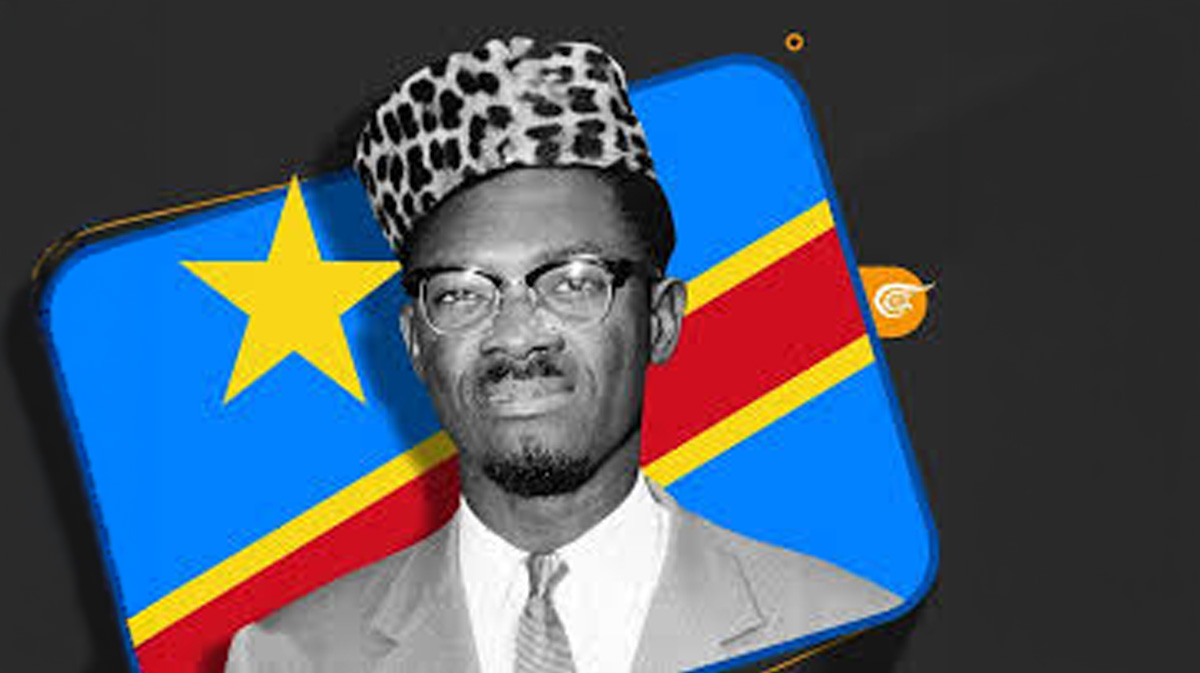
Patrice Lumumba was a towering figure of African decolonization, a gifted orator who helped wrench Congo from brutal Belgian rule in 1960…

Patrice Lumumba was a towering figure of African decolonization, a gifted orator who helped wrench Congo from brutal Belgian rule in 1960 and briefly served as its first prime minister before being overthrown and assassinated months later. Decades after his death, his killing remains one of the 20th century’s most resonant political assassinations, emblematic of how African hopes for genuine independence were undercut by Cold War intrigue and lingering colonial power.
Born in 1925 in Kasai province in what was then the Belgian Congo, Lumumba rose from missionary schooling and a low-ranking post office job into politics, with his early, cautious support for Belgium hardening into anti-colonial conviction. A politically tinged embezzlement conviction and a year in jail only boosted his stature, and by 1958 he was leading a national party for independence, galvanizing crowds with his energy and rhetoric.
The wider African wave of independence, including Ghana’s break from Britain in 1957, shaped Lumumba’s ambitions as he joined decolonization conferences and emerged as a star advocate of a unified, independent continent. Despite another spell in prison after riots, his party won a plurality in early 1960 elections, positioning him to become prime minister as Congo hurtled toward self-rule.
On Independence Day, June 30, 1960, Lumumba delivered an unscripted, nationally broadcast speech before Belgium’s king that bluntly described colonial rule as “humiliating slavery” imposed by force. The address was condemned by critics as incendiary but electrified Africans, cementing his reputation as a leader willing to name and resist colonial abuses in direct, unsparing terms.
Once in power, Lumumba’s government struggled to assert control, particularly over the military, amid post-independence violence that targeted foreigners and exposed the fragility of the new state. Belgium, eager to retain influence over the army, sent in troops, while the mineral-rich province of Katanga seceded with Belgian support, drawing in the United Nations’ first peacekeeping mission in Africa.
The crisis quickly became entangled in the Cold War as Western officials cast Lumumba as an unpredictable leftist who might pull Congo toward the Soviet bloc, even though Moscow offered limited tangible help. In September 1960, Joseph-Désiré Mobutu, an army colonel whom Lumumba had himself promoted, effectively staged a coup, and Lumumba was arrested while trying to flee.
Lumumba was detained in military barracks, then transferred to Katanga, where he was beaten, tortured and executed by firing squad on January 17, 1961, before his body was dissolved in acid to erase physical traces. A United Nations report later blamed Belgian mercenaries and Katangan officials, while Lumumba’s final letter to his wife insisted that history would vindicate him and be written by Africans, not by the colonial capitals or the U.N.
Over time, Lumumba has come to be revered as a figure akin to Nelson Mandela, his bespectacled face and side-parted Afro reproduced on posters and T-shirts across the continent. Some historians argue his brief time in office did not match his mythic status, but his life and death have inspired biographies, the feature film “Lumumba,” a 1990 Raoul Peck documentary, and the 2024 film “Soundtrack to a Coup d’Etat.”
Mobutu, the officer who deposed him, went on to rule Congo—renamed Zaire—as a harsh, pro-Western dictator for more than 30 years, a contrast that further elevated Lumumba’s aura as the path not taken. Revelations that the Central Intelligence Agency once prepared a poisoning plot against Lumumba, flying in an expert in covert toxins before the plan fizzled, added to the sense that powerful foreign actors conspired to remove him.
Belgium has slowly been forced to confront its role, a process highlighted by a Brussels court’s decision to order 93-year-old retired diplomat Étienne Davignon to stand trial on war-crimes charges related to Lumumba’s killing. This follows a 2001 parliamentary inquiry acknowledging Belgium’s “moral responsibility” and the 2022 return of a single gold-capped tooth, the only known remnant of Lumumba’s body, to his family in Congo.






Politics
Shadows Over Atlanta’s Burning Streets
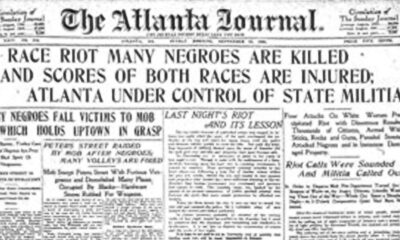
The Atlanta Race Massacre of 1906 stands as one of the most violent and defining episodes of racial conflict in early twentieth-century America.
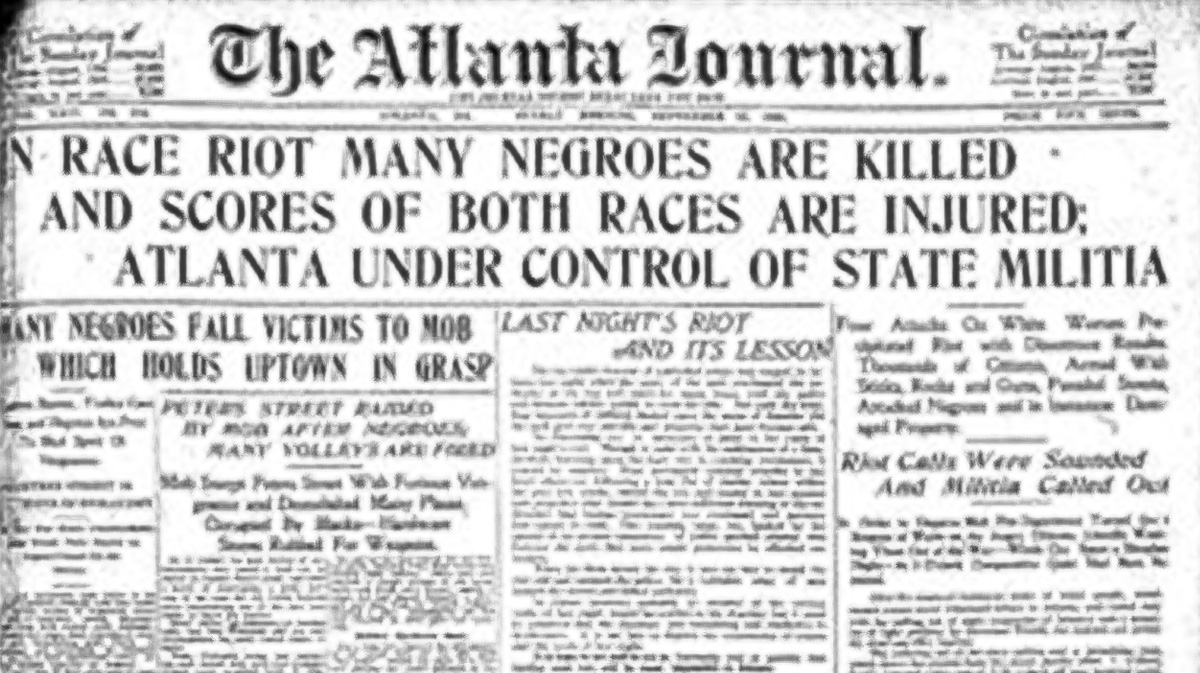
The Atlanta Race Massacre of 1906 stands as one of the most violent and defining episodes of racial conflict in early twentieth-century America. Occurring over several days in September 1906, the violence revealed the deep fractures within a rapidly modernizing Southern city struggling with race, power, and identity. Atlanta, often celebrated as a symbol of the “New South,” became the stage for a brutal eruption of white mob violence against Black citizens.
At the turn of the century, Atlanta was experiencing rapid growth. Railroads, industry, and commerce were transforming the city into a regional hub. Black Atlantans, many of them descendants of formerly enslaved people, were also building institutions, businesses, and communities that reflected ambition and resilience. This progress, however, stirred resentment among many white residents who viewed Black advancement as a threat to social hierarchy.
The political climate leading up to the massacre was deeply charged. Georgia’s gubernatorial race in 1906 intensified racial tensions, as candidates openly appealed to white supremacy to gain support. Campaign rhetoric frequently invoked fear of Black political power and social equality, reinforcing divisions that had been simmering since Reconstruction.
Local newspapers played a critical role in inflaming these tensions. Sensationalized and often fabricated reports of assaults by Black men against white women were published repeatedly in the days before the violence. These stories, designed to provoke outrage, spread rapidly among white readers and helped create a climate of fear and anger that would soon erupt.
On the evening of September 22, 1906, mobs of white men began gathering in downtown Atlanta. Fueled by rumors and alcohol, they attacked Black individuals indiscriminately. Streetcars were stopped, and Black passengers were beaten or dragged into the streets. The violence spread quickly through the city’s central districts.
As the mob grew, the brutality intensified. Black-owned businesses were looted and destroyed, and entire neighborhoods were targeted. The attackers, often numbering in the thousands, operated with little immediate resistance. Law enforcement was either overwhelmed or complicit, failing to protect Black residents.
Black Atlantans fought back where they could. In some neighborhoods, armed resistance emerged as individuals and groups attempted to defend their homes and families. These acts of self-defense, though courageous, were met with even greater retaliation from white mobs and authorities.
The violence continued for several days, spreading beyond the downtown area into other parts of the city. Reports of beatings, shootings, and killings multiplied. Black residents were forced into hiding, seeking refuge wherever they could find safety.
The official death toll was reported as around two dozen people, though historians widely believe the true number was much higher. Many deaths went unrecorded, particularly those of Black victims. Injuries numbered in the hundreds, and countless families were left traumatized and displaced.
Economic devastation followed the physical violence. Black businesses that had taken years to build were destroyed overnight. Property damage was extensive, and many Black Atlantans lost their livelihoods in the aftermath.
The response from city officials was slow and inadequate. Eventually, the state militia was deployed to restore order, but by that time much of the damage had already been done. The delay in intervention raised serious questions about the willingness of authorities to protect Black citizens.
In the aftermath, Atlanta’s Black community faced increased restrictions and segregation. Rather than addressing the root causes of the violence, many white leaders doubled down on policies that reinforced racial inequality. Jim Crow laws became more entrenched in daily life.
The massacre also had a profound psychological impact. Fear and mistrust deepened between Black and white communities. For many Black Atlantans, the events of 1906 underscored the precariousness of their safety and rights, even in a city that prided itself on progress.
Despite the trauma, Black leaders and communities began to reorganize and rebuild. Institutions such as churches, schools, and civic organizations played a crucial role in restoring a sense of stability and purpose. These spaces became centers of resilience and resistance.
Prominent figures like W. E. B. Du Bois, who had ties to Atlanta, used the massacre as evidence of the urgent need for civil rights advocacy. The violence reinforced arguments that systemic racism was deeply embedded in American society and required organized resistance.
The massacre also influenced the broader trajectory of the civil rights movement. It highlighted the dangers of unchecked racism and the consequences of political leaders exploiting racial fears. These lessons would resonate in the decades to come.
Nationally, the events in Atlanta drew attention to racial violence across the United States. The massacre was not an isolated incident but part of a larger pattern of attacks on Black communities during this period. Similar outbreaks occurred in other cities, reflecting widespread racial tensions.
Media coverage outside the South varied, with some outlets condemning the violence while others echoed the racial biases of the time. The lack of a unified national response revealed the depth of division within the country over issues of race and justice.
Over time, the memory of the massacre faded from mainstream historical narratives. For many years, it was overshadowed by other events and omitted from textbooks. However, scholars and community leaders have worked to bring renewed attention to this critical moment in history.
In recent decades, efforts have been made to acknowledge and commemorate the victims. Historical markers, public discussions, and academic research have helped ensure that the events of 1906 are not forgotten. These efforts are part of a broader movement to confront difficult aspects of the past.
Understanding the Atlanta Race Massacre requires examining the intersection of race, politics, media, and economics. It was not a spontaneous घटना but the result of deliberate actions and systemic inequalities that created a volatile environment.
The legacy of the massacre continues to shape conversations about race and justice in America. It serves as a reminder of the consequences of hatred and the importance of vigilance in protecting civil rights.
Today, Atlanta is often seen as a center of Black culture, business, and political power. This transformation reflects the resilience of its Black community, which endured and overcame immense adversity in the wake of events like the 1906 massacre.
The story of the Atlanta Race Massacre of 1906 is ultimately one of both tragedy and resilience. While it exposes the darkest aspects of American history, it also highlights the strength and determination of those who survived and rebuilt.
Politics
Revolutionary Vision of Samora Machel
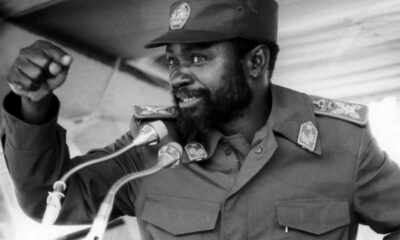
Samora Machel was one of Africa’s most influential revolutionary leaders, widely recognized for his central role in Mozambique’s fight for independence and his strong commitment to socialist ideals.
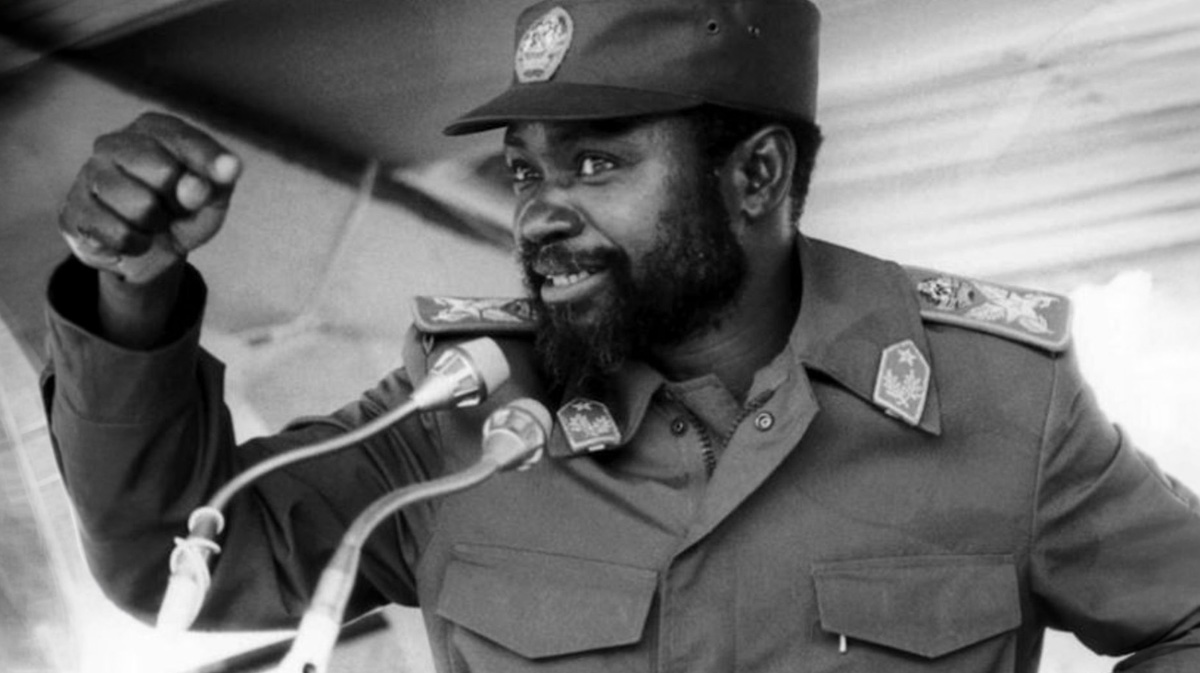
Samora Machel was one of Africa’s most influential revolutionary leaders, widely recognized for his central role in Mozambique’s fight for independence and his strong commitment to socialist ideals. Born in 1933 in rural Mozambique during Portuguese colonial rule, Machel grew up in a society deeply divided by race and class. African communities were subjected to forced labor, economic exploitation, and limited access to education and healthcare. These harsh conditions profoundly shaped his worldview and instilled in him a deep sense of injustice, which would later fuel his determination to fight for liberation and equality.
Before entering politics, Machel trained and worked as a nurse, a profession that brought him into close contact with the daily struggles of ordinary Mozambicans. In colonial hospitals, he observed stark inequalities in the treatment of patients, where Europeans received far better care than Africans. This experience was not only professionally formative but also politically awakening. It reinforced his understanding that systemic injustice was embedded in colonial rule, motivating him to move beyond individual care and toward collective political action aimed at transforming society.
Machel’s political journey began when he joined FRELIMO (Front for the Liberation of Mozambique), a movement formed to challenge Portuguese colonial authority and achieve independence. Within FRELIMO, Machel quickly distinguished himself through his discipline, intelligence, and unwavering commitment to the cause. He underwent military and political training and became actively involved in organizing resistance efforts. His leadership qualities became evident early on, earning him respect among his peers and superiors.
Following the assassination of Eduardo Mondlane in 1969, Machel assumed leadership of FRELIMO during a critical period in the liberation struggle. Under his direction, the movement intensified its armed resistance while also strengthening its political organization. He believed that military action alone was insufficient and emphasized the importance of ideological education among fighters and civilians. For Machel, the struggle was not just about defeating colonial forces but about preparing the population to build a new, just society after independence.
Central to Machel’s philosophy was his belief in socialism as the most effective path toward national development and social justice. He argued that political independence without economic transformation would leave the structures of exploitation intact. Socialism, in his view, provided a framework for redistributing wealth, eliminating class inequalities, and ensuring that the country’s resources benefited all citizens rather than a privileged few. His vision was deeply rooted in the idea that the state should play a leading role in guiding development and protecting the interests of the people.
A key aspect of Machel’s philosophy was the emphasis on collective responsibility and communal values. He rejected individualism as a legacy of colonial and capitalist systems, advocating instead for cooperation and shared effort. This belief influenced policies such as communal farming and state-managed industries, which were intended to promote equality and prevent the concentration of wealth. Machel encouraged citizens to see themselves as part of a unified national project, where each person had a role to play in rebuilding the country.
Education was another cornerstone of Machel’s vision for Mozambique. He believed that a truly independent nation required an informed and politically conscious population. During the liberation struggle, FRELIMO established schools in liberated areas to teach literacy, technical skills, and revolutionary ideology. After independence, expanding access to education became a national priority. Machel saw education not only as a tool for personal advancement but also as a means of fostering national identity and empowering citizens to participate actively in society.
Machel was also a strong advocate for women’s liberation, recognizing that gender equality was essential to achieving broader social justice. He challenged traditional norms that limited women’s roles and actively promoted their participation in the liberation struggle. Women served as soldiers, organizers, and educators, demonstrating their capabilities and commitment. Machel believed that a society could not be truly free if half its population remained oppressed, and he consistently emphasized the need for women’s full inclusion in political, economic, and social life.
Healthcare was another area where Machel sought to implement his philosophy in practical terms. Drawing on his background as a nurse, he understood the importance of accessible and equitable medical services. After independence, his government worked to expand healthcare infrastructure, particularly in rural areas that had been neglected under colonial rule. The goal was to ensure that all citizens, regardless of location or income, had access to basic health services, thereby improving overall quality of life.
When Mozambique gained independence in 1975, Machel became its first president, marking the beginning of a new era in the country’s history. This transition from revolutionary leader to head of state presented both opportunities and challenges. Machel was now tasked with implementing his ideas on a national scale, rebuilding a country that had been economically and socially weakened by years of colonial exploitation and war.
However, the post-independence period was fraught with difficulties. Mozambique faced severe economic challenges, including a lack of infrastructure, skilled labor shortages, and limited financial resources. Additionally, the country became entangled in regional conflicts, particularly due to its support for liberation movements in neighboring countries. These external pressures, especially from apartheid-era South Africa and Rhodesia, destabilized the nation and hindered development efforts.
Despite these challenges, Machel remained steadfast in his commitment to his principles. He continued to advocate for self-reliance, urging Mozambicans to depend on their own efforts rather than external aid. His speeches often emphasized discipline, unity, and perseverance, encouraging citizens to remain focused on long-term goals despite immediate hardships. His leadership inspired many, even during difficult times.
Machel was also deeply committed to pan-Africanism, the idea that African nations should unite to overcome shared challenges and achieve collective progress. He worked closely with other African leaders to promote regional cooperation and resist foreign domination. His support for liberation movements across the continent reflected his belief that the struggle against oppression was not confined to national borders.
His leadership style was both charismatic and direct, allowing him to connect with people from all walks of life. Machel was known for his powerful and engaging speeches, which often combined practical advice with ideological guidance. He had a unique ability to communicate complex ideas in simple terms, making his message accessible to ordinary citizens. This approach helped build trust and foster a sense of shared purpose among the population.
At the same time, Machel’s policies were not without criticism or controversy. Some of his socialist initiatives faced implementation challenges, particularly in a country with limited resources and administrative capacity. Economic difficulties persisted, and certain policies were seen by critics as overly ambitious or difficult to sustain. These challenges highlight the complexities of translating revolutionary ideals into practical governance.
Tragically, Machel’s life was cut short in 1986 when he died in a plane crash near the border of South Africa. His sudden death shocked the nation and the broader international community. The circumstances surrounding the crash have been widely debated, adding an element of mystery and controversy to his legacy.
In the years following his death, Machel’s influence remained strong in Mozambique and beyond. He came to be regarded as a symbol of resistance, courage, and dedication to social justice. His role in securing independence and his efforts to reshape society left a lasting impact that continues to be recognized and honored.
Machel’s philosophy continues to be studied by scholars and political thinkers interested in post-colonial development and African political history. His ideas about socialism, equality, and national unity offer important insights into the challenges faced by newly independent nations. While not all aspects of his vision were सफल, his commitment to improving the lives of his people remains deeply inspiring.
In modern Mozambique, Machel is celebrated as a national hero whose contributions are commemorated through monuments, institutions, and public remembrance. His legacy is deeply embedded in the country’s identity and historical narrative, serving as a reminder of the sacrifices made during the struggle for independence.
In conclusion, Samora Machel was a transformative leader whose philosophy combined revolutionary determination with a vision for social and economic justice. His life’s work reflects a deep commitment to equality, unity, and national development. Although he faced significant challenges, his ideas and leadership continue to resonate, making him a central figure in the history of Mozambique and the broader African continent.Revolutionary Vision of Samora Machel
Samora Machel was one of Africa’s most influential revolutionary leaders, widely recognized for his central role in Mozambique’s fight for independence and his strong commitment to socialist ideals. Born in 1933 in rural Mozambique during Portuguese colonial rule, Machel grew up in a society deeply divided by race and class. African communities were subjected to forced labor, economic exploitation, and limited access to education and healthcare. These harsh conditions profoundly shaped his worldview and instilled in him a deep sense of injustice, which would later fuel his determination to fight for liberation and equality.
Before entering politics, Machel trained and worked as a nurse, a profession that brought him into close contact with the daily struggles of ordinary Mozambicans. In colonial hospitals, he observed stark inequalities in the treatment of patients, where Europeans received far better care than Africans. This experience was not only professionally formative but also politically awakening. It reinforced his understanding that systemic injustice was embedded in colonial rule, motivating him to move beyond individual care and toward collective political action aimed at transforming society.
Machel’s political journey began when he joined FRELIMO (Front for the Liberation of Mozambique), a movement formed to challenge Portuguese colonial authority and achieve independence. Within FRELIMO, Machel quickly distinguished himself through his discipline, intelligence, and unwavering commitment to the cause. He underwent military and political training and became actively involved in organizing resistance efforts. His leadership qualities became evident early on, earning him respect among his peers and superiors.
Following the assassination of Eduardo Mondlane in 1969, Machel assumed leadership of FRELIMO during a critical period in the liberation struggle. Under his direction, the movement intensified its armed resistance while also strengthening its political organization. He believed that military action alone was insufficient and emphasized the importance of ideological education among fighters and civilians. For Machel, the struggle was not just about defeating colonial forces but about preparing the population to build a new, just society after independence.
Central to Machel’s philosophy was his belief in socialism as the most effective path toward national development and social justice. He argued that political independence without economic transformation would leave the structures of exploitation intact. Socialism, in his view, provided a framework for redistributing wealth, eliminating class inequalities, and ensuring that the country’s resources benefited all citizens rather than a privileged few. His vision was deeply rooted in the idea that the state should play a leading role in guiding development and protecting the interests of the people.
A key aspect of Machel’s philosophy was the emphasis on collective responsibility and communal values. He rejected individualism as a legacy of colonial and capitalist systems, advocating instead for cooperation and shared effort. This belief influenced policies such as communal farming and state-managed industries, which were intended to promote equality and prevent the concentration of wealth. Machel encouraged citizens to see themselves as part of a unified national project, where each person had a role to play in rebuilding the country.
Education was another cornerstone of Machel’s vision for Mozambique. He believed that a truly independent nation required an informed and politically conscious population. During the liberation struggle, FRELIMO established schools in liberated areas to teach literacy, technical skills, and revolutionary ideology. After independence, expanding access to education became a national priority. Machel saw education not only as a tool for personal advancement but also as a means of fostering national identity and empowering citizens to participate actively in society.
Machel was also a strong advocate for women’s liberation, recognizing that gender equality was essential to achieving broader social justice. He challenged traditional norms that limited women’s roles and actively promoted their participation in the liberation struggle. Women served as soldiers, organizers, and educators, demonstrating their capabilities and commitment. Machel believed that a society could not be truly free if half its population remained oppressed, and he consistently emphasized the need for women’s full inclusion in political, economic, and social life.
Healthcare was another area where Machel sought to implement his philosophy in practical terms. Drawing on his background as a nurse, he understood the importance of accessible and equitable medical services. After independence, his government worked to expand healthcare infrastructure, particularly in rural areas that had been neglected under colonial rule. The goal was to ensure that all citizens, regardless of location or income, had access to basic health services, thereby improving overall quality of life.
When Mozambique gained independence in 1975, Machel became its first president, marking the beginning of a new era in the country’s history. This transition from revolutionary leader to head of state presented both opportunities and challenges. Machel was now tasked with implementing his ideas on a national scale, rebuilding a country that had been economically and socially weakened by years of colonial exploitation and war.
However, the post-independence period was fraught with difficulties. Mozambique faced severe economic challenges, including a lack of infrastructure, skilled labor shortages, and limited financial resources. Additionally, the country became entangled in regional conflicts, particularly due to its support for liberation movements in neighboring countries. These external pressures, especially from apartheid-era South Africa and Rhodesia, destabilized the nation and hindered development efforts.
Despite these challenges, Machel remained steadfast in his commitment to his principles. He continued to advocate for self-reliance, urging Mozambicans to depend on their own efforts rather than external aid. His speeches often emphasized discipline, unity, and perseverance, encouraging citizens to remain focused on long-term goals despite immediate hardships. His leadership inspired many, even during difficult times.
Machel was also deeply committed to pan-Africanism, the idea that African nations should unite to overcome shared challenges and achieve collective progress. He worked closely with other African leaders to promote regional cooperation and resist foreign domination. His support for liberation movements across the continent reflected his belief that the struggle against oppression was not confined to national borders.
His leadership style was both charismatic and direct, allowing him to connect with people from all walks of life. Machel was known for his powerful and engaging speeches, which often combined practical advice with ideological guidance. He had a unique ability to communicate complex ideas in simple terms, making his message accessible to ordinary citizens. This approach helped build trust and foster a sense of shared purpose among the population.
At the same time, Machel’s policies were not without criticism or controversy. Some of his socialist initiatives faced implementation challenges, particularly in a country with limited resources and administrative capacity. Economic difficulties persisted, and certain policies were seen by critics as overly ambitious or difficult to sustain. These challenges highlight the complexities of translating revolutionary ideals into practical governance.
Tragically, Machel’s life was cut short in 1986 when he died in a plane crash near the border of South Africa. His sudden death shocked the nation and the broader international community. The circumstances surrounding the crash have been widely debated, adding an element of mystery and controversy to his legacy.
In the years following his death, Machel’s influence remained strong in Mozambique and beyond. He came to be regarded as a symbol of resistance, courage, and dedication to social justice. His role in securing independence and his efforts to reshape society left a lasting impact that continues to be recognized and honored.
Machel’s philosophy continues to be studied by scholars and political thinkers interested in post-colonial development and African political history. His ideas about socialism, equality, and national unity offer important insights into the challenges faced by newly independent nations. While not all aspects of his vision were सफल, his commitment to improving the lives of his people remains deeply inspiring.
In modern Mozambique, Machel is celebrated as a national hero whose contributions are commemorated through monuments, institutions, and public remembrance. His legacy is deeply embedded in the country’s identity and historical narrative, serving as a reminder of the sacrifices made during the struggle for independence.
In conclusion, Samora Machel was a transformative leader whose philosophy combined revolutionary determination with a vision for social and economic justice. His life’s work reflects a deep commitment to equality, unity, and national development. Although he faced significant challenges, his ideas and leadership continue to resonate, making him a central figure in the history of Mozambique and the broader African continent.
Politics
She Always Needs Her Space
Thabiso Mandela moves through architecture with the quiet assurance of someone who understands that buildings are more than structures…

Thabiso Mandela moves through architecture with the quiet assurance of someone who understands that buildings are more than structures—they are instruments of diplomacy, memory, and public life. A Professional Architect with deep roots in both design and planning, Mandela’s career traces a thoughtful arc across private practice and public service, where the built environment becomes a platform for national identity and international presence.
This perspective did not emerge overnight. It is the result of years spent observing how people interact with space, how institutions express themselves through architecture, and how design choices ripple outward into social experience. Mandela’s work consistently reflects an awareness that architecture is never neutral; it carries meaning, intention, and consequence.
Today, Mandela serves as Chief Architect for South Africa’s Department of International Relations and Cooperation, a role that sits at the intersection of architecture and statecraft. Here, design is not only about aesthetics or function, but about representing a nation across borders. Embassies, missions, and official spaces must speak a careful architectural language—one that communicates dignity, cultural nuance, and strategic intent.
Mandela’s work in this arena reflects a rare ability to translate policy and symbolism into physical form, shaping environments that carry the weight of diplomacy while remaining humane and purposeful. In these spaces, architecture becomes a silent ambassador, offering a spatial expression of South Africa’s values and identity to the world.
Alongside this public mandate, Mandela also holds a directorship at PDA Architects, continuing to engage the private sector with the same intellectual rigor. This dual presence in government and practice allows for a dynamic exchange of ideas, where lessons from institutional projects inform private commissions, and vice versa.
It is a balance that reveals a practitioner comfortable navigating complexity, scale, and responsibility. Mandela understands how to move between different types of clients, briefs, and expectations without losing sight of architectural integrity.
Mandela’s earlier professional journey laid the groundwork for this leadership. As a Candidate Architect at Savage + Dodd Architects, there was the formative experience of learning craft within an established design culture. Here, attention to detail, precision, and disciplined thinking became foundational habits.
This was followed by a significant chapter at CSM Consulting Services (Pty) Ltd, where Mandela served as Professional Architect and Director from 2018 to 2023. In this role, Mandela sharpened not only design expertise but also the managerial and strategic skills required to lead projects and teams in a demanding industry.
“Mandela’s work in this arena reflects a rare ability to translate policy and symbolism into physical form…”
Leading a consultancy required balancing creativity with accountability, vision with feasibility, and ambition with budget. These experiences cultivated a practical wisdom that continues to inform Mandela’s current work at both governmental and private levels.
Academic foundations underpin this trajectory. Mandela holds a Master of Architecture and a Bachelor of Architectural Studies (Honours) from the University of the Witwatersrand, complemented by a Bachelor of Architectural Studies from the University of Cape Town.
These institutions, known for their rigorous engagement with context, history, and spatial thinking, shaped an architect attuned to the social and political dimensions of space. The academic journey reinforced the belief that architecture must respond thoughtfully to its environment and its people.
What distinguishes Mandela’s career is not merely the list of roles held, but the continuity of purpose that threads through them. Whether designing within a private firm, leading a consultancy, or shaping the architectural face of a nation abroad, Mandela approaches architecture as a civic act.
Each project, each appointment, contributes to a broader conversation about how South Africans inhabit, represent, and understand their spaces. Mandela’s work invites reflection on how architecture can be both functional and symbolic at once.
In an era where architecture is often reduced to spectacle or speed, Mandela’s work stands as a reminder of its deeper function: to serve people, to embody values, and to quietly anchor the narratives of institutions and communities. Through this lens, architecture becomes not only a profession, but a form of stewardship.


Roots Of Defiant African Resistance

A Voice Rising With Purpose

Poetry At The Cosmic Edge







-

 Sports9 months ago
Grace, Grit, Gold on Ice
-

 Entertainment8 months ago
Serena Williams Super Bowl LX Commercial ‘Healthier on Ro’
-

 Fashion8 months ago
The Face That Redefined Beauty
-

 Business8 months ago
Curl Fest is Back
-

 Culture7 months ago
The Return of Chrisette Michele
-
 Culture8 months ago
Patterns of Systemic Black Destabilization
-
 Business9 years ago
Charles White: Art and Human Dignity
-

 Fashion7 months ago
Bold Spatial Vision