
Business
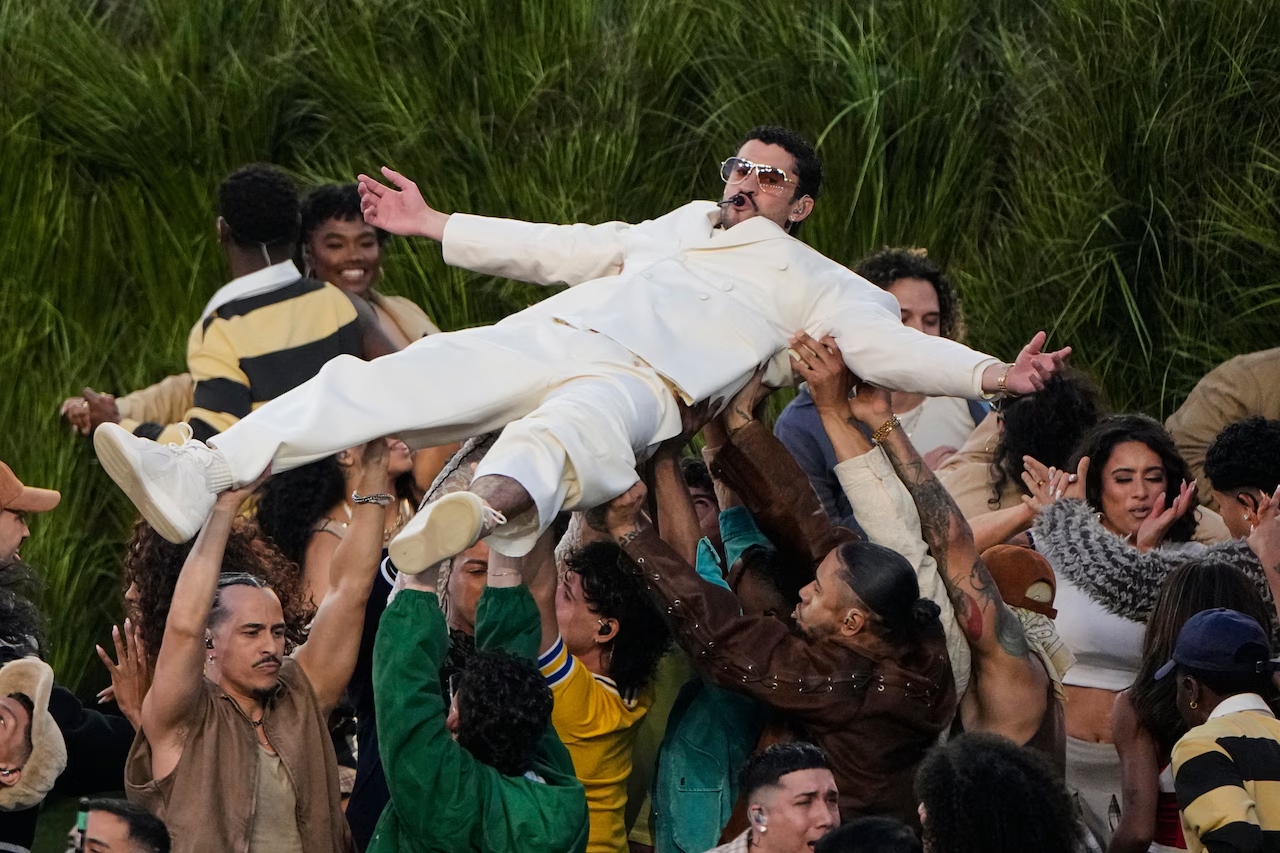
Island Pride Electrifies Super Bowl Halftime
His choice of costumes and visuals underlined the personal nature of the show.

“The show also resonated as a statement of Latin influence on global pop culture.”But the performance wasn’t without controversy. Some critics cited discomfort with a predominantly Spanish set, while others debated how cultural messaging should intersect with a sporting event. The reaction highlighted ongoing tensions in how mainstream American stages embrace linguistic and cultural diversity. Yet for many viewers, the halftime show delivered a poignant message of unity. Bad Bunny famously ended his set by holding a football inscribed with “Together we are America,” listing countries across the Americas and calling for shared pride and community, underscoring his mission to bridge cultural divides. The show also resonated as a statement of Latin influence on global pop culture. With immersive set design, surprise collaborations, and a message rooted in love and inclusivity, Bad Bunny’s halftime performance expanded what a Super Bowl spectacle could represent in an increasingly diverse cultural landscape. Ultimately, Bad Bunny’s Super Bowl halftime performance will be remembered not just for its musical spectacle but for its bold cultural affirmation — a moment where mainstream Americana and diasporic identity intersected under the brightest spotlight on the world stage.





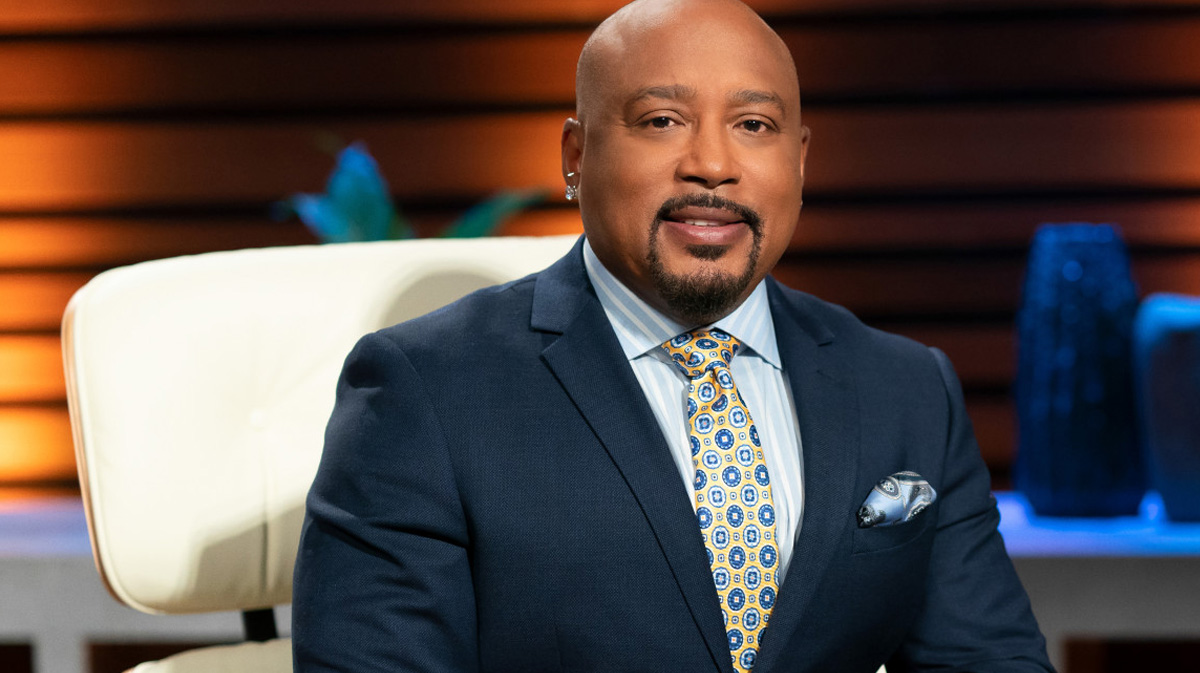
Daymond John has long been recognized for his sharp business instincts, but some of the most meaningful lessons about his approach don’t come from television appearances or public speeches—they come from small, personal moments that reveal how he thinks. I’ve encountered many high-profile figures over the years, but only one ever asked for something as personal as my home address. That moment stood out immediately, not because of status, but because of what followed, and what it revealed about intentionality in business.
After a speaking event in Las Vegas, Daymond John casually offered to send something my way. It felt like a polite, almost offhand gesture—the kind of thing people say in passing without much follow-through. I shared my address without much expectation, assuming that if anything arrived, it would be a small token or a one-time acknowledgment of the interaction.
Weeks later, a package arrived, and it was far more substantial than expected. Inside were products connected to his business network—items that represented brands, partnerships, and ventures he was involved in. It immediately felt different from a simple gift. It felt curated, intentional, and connected to something larger than a one-off gesture.
What made the experience even more striking was that it didn’t stop there. More packages followed over time, each one tied to a different product or business within his expanding ecosystem. It became clear that this wasn’t random generosity. Each delivery represented a deliberate extension of his network, a subtle but powerful demonstration of how he builds relationships and promotes the businesses around him.
With every package that arrived, the same realization came to mind: this is how a strategic entrepreneur operates. It wasn’t about giving for the sake of giving—it was about creating touchpoints, building awareness, and reinforcing connections. He was, in essence, turning a simple interaction into an ongoing engagement, all while supporting the brands within his circle.
While many people are familiar with his origin story—building a global brand from the ground up—fewer pay attention to how consistently he creates new opportunities. His approach isn’t about chasing completely new ideas in isolation. Instead, it’s about recognizing patterns in everyday life and responding to them with intention and precision.
When people repeatedly asked him for advice, he didn’t just answer questions—he built services and platforms to meet that demand at scale. When his personal interests shifted or expanded, he found ways to turn those interests into viable business ventures. Each move wasn’t random; it was rooted in something already happening around him, something he observed and chose to act on.
At the core of his philosophy is a simple but powerful truth: most successful ideas are not entirely new. They are often refinements, improvements, or reinterpretations of concepts that already exist. This perspective removes the pressure of needing to invent something from scratch and instead focuses attention on execution and relevance.
He often emphasizes that innovation comes from doing something familiar in a better, smarter, or more meaningful way. Whether the product is something as simple as socks, beverages, or everyday household items, the category itself is rarely the deciding factor. What matters is how the product is positioned, delivered, and experienced by the customer.
Timing also plays a critical role in his thinking. A great product introduced at the wrong time can struggle, while a well-timed idea can thrive even in a crowded market. Cultural trends, technological advancements, and shifts in consumer behavior all influence whether an idea gains traction or fades into the background.
Equally important is understanding what motivates the customer. People are not just buying products—they are buying experiences, stories, and identities. A product that offers a sense of purpose or something worth sharing becomes more than a transaction; it becomes part of the customer’s lifestyle and self-expression.
Branding, in his view, is never one-dimensional. It operates on multiple levels simultaneously. There’s the influence of celebrity and visibility, the aspirational imagery that draws people in, the authenticity of the founder’s story, and the quality of the product itself. When all of these elements align, the brand becomes far more powerful.
In today’s landscape, founders themselves have become an integral part of the brand. People want to know who is behind the product, what they believe in, and whether their story feels genuine. This shift has made personal branding just as important as the product being sold.
He encourages entrepreneurs to define themselves clearly and communicate that identity consistently across everything they do. A strong, well-articulated personal message acts as a foundation, guiding decisions and helping audiences understand what the brand truly represents.
Transparency is another key element of his philosophy. By sharing personal challenges, failures, and real-life experiences, founders create deeper, more meaningful connections with their audience. These moments of honesty make success feel more attainable and the journey more relatable.
Ultimately, his lessons come down to resilience and mindset. The most successful entrepreneurs are not just those with great ideas, but those who continue moving forward, adapt when challenges arise, and build momentum over time. When that momentum becomes strong enough, it naturally draws others in—partners, customers, and supporters who want to be part of something that is clearly going somewhere.
Business
Brooklyn’s Caribbean Soul Dining Landmark
In the heart of Brooklyn, a restaurant called The Simpson Restaurant & Bar has become a vibrant gathering place where Caribbean flavor meets the energy of New York City.

In the heart of Brooklyn, a restaurant called The Simpson Restaurant & Bar has become a vibrant gathering place where Caribbean flavor meets the energy of New York City. Known for its bold dishes, lively environment, and strong community presence, the restaurant reflects the cultural diversity that defines Brooklyn itself. Its name has grown familiar to locals who are looking for a memorable meal that blends comfort, spice, and creativity.
The restaurant was created by chef and entrepreneur Wenford Patrick Simpson, whose culinary vision centers on bringing Caribbean traditions into a contemporary dining space. His goal was to create more than just a restaurant. He wanted a place where food, music, culture, and social connection could come together under one roof.
Located along Atlantic Avenue, the Brooklyn location sits in one of the borough’s busiest and most culturally rich corridors. The neighborhood around the restaurant is filled with arts venues, nightlife, and residential life, which makes the restaurant a natural meeting point for people from many different backgrounds.
Inside the restaurant, guests are greeted by a stylish interior that blends modern design with warm Caribbean influences. The décor often features vibrant colors, comfortable seating, and a layout designed for both casual dining and special celebrations. The environment encourages conversation, laughter, and the enjoyment of good food.
The menu at Simpson’s focuses on Caribbean cuisine while also embracing the comforting flavors of American soul food. Many dishes are prepared using traditional cooking techniques that highlight seasoning, slow cooking, and rich sauces.
One of the reasons the restaurant stands out is its dedication to bold, memorable flavors. Diners frequently gravitate toward dishes such as tender oxtail, jerk-seasoned meats, seafood specialties, and hearty side dishes that reflect the traditions of Caribbean home cooking.
Seafood is another highlight of the kitchen. Fresh fish, shrimp, and lobster often appear on the menu, seasoned with island spices and presented with a modern culinary style that elevates traditional recipes.
The bar plays an important role in the dining experience as well. Guests can enjoy tropical cocktails, rum-based drinks, and creative house specialties that pair perfectly with the rich flavors of the food.
Music and energy are also part of the restaurant’s personality. The sound of Caribbean rhythms, hip-hop, or contemporary R&B often fills the room, helping to create a lively yet comfortable social environment.
Over time, the restaurant has become known as a place where people celebrate birthdays, gather with friends, and enjoy nights out in Brooklyn. Its atmosphere encourages a sense of community that keeps many customers returning again and again.
The success of the Brooklyn location eventually inspired expansion beyond New York City. The brand began exploring new markets where its blend of Caribbean cuisine and nightlife could attract a wider audience.
One of the most notable expansions brought Simpson’s to Atlantic City, a city famous for entertainment, nightlife, and tourism along the New Jersey coast. The new location introduced the restaurant’s signature dishes to visitors and residents of the resort city.
In Atlantic City, the restaurant blends its Caribbean dining concept with elements of a sports-bar atmosphere. Large screens, energetic crowds, and a festive vibe create a space where guests can enjoy both food and entertainment.
Despite its growth, the restaurant continues to maintain the same spirit that made the original Brooklyn location popular. The recipes, hospitality, and cultural pride remain central to the brand’s identity. Great teamwork by the managers, staff, team, and kitchen crew means everyone works together to accomplish the goal, cooking with love as a team.
Simpson often says this is not about himself anymore; it’s about his staff pursuing their dreams and customers having a great time with friends and family. Simpson, coming from humble beginnings, from being homeless and hiding to sleep on the hotel property where he worked at 18 years old, now has 150 staff who provide for their families while working for Chef Simpson.
For many diners, Simpson’s represents the power of food to celebrate culture. Caribbean flavors, family traditions, and modern dining all come together in a way that reflects the diversity of urban life.
Restaurants like Simpson’s help demonstrate how immigrant culinary traditions influence the broader American food scene. By sharing Caribbean cuisine with a wider audience, the restaurant contributes to the cultural richness of cities like Brooklyn and Atlantic City, with Miami, Terminal 5 at JFK, Atlanta, and Houston coming soon.
Ultimately, The Simpson Restaurant & Bar is more than just a place to eat. It is a cultural space where food, music, and community meet, creating an experience that reflects the vibrant spirit of both Brooklyn and Atlantic City.
Atmosphere: Stylish Caribbean-inspired dining space with lively social energy.
Service: Friendly and attentive service designed to make guests feel welcomed and comfortable.
Sound Level: Energetic and moderately loud, with music contributing to the vibrant mood.
Recommended: Guests often recommend the oxtail, jerk chicken, seafood dishes, and macaroni pie.
Food: Caribbean and soul-food-inspired cuisine with bold seasoning and rich flavors.
Drinks: Tropical cocktails, rum drinks, and a full bar complement the menu.
Price: Moderate to slightly upscale pricing typical of popular Brooklyn restaurants.
Times Open: Generally open from late morning through evening, with extended weekend hours.
Reservations: Reservations are available and recommended during busy evenings.
Wheelchair Access: The restaurant offers accessible entry and seating for wheelchair users.
Thank you,
Chef Wenford Patrick Simpson
Website:
http://www.chefwenfordpsimpson.com/welcome/#chef-wenford-p-simpson
Instagram:
https://www.instagram.com/chefwsimpson/
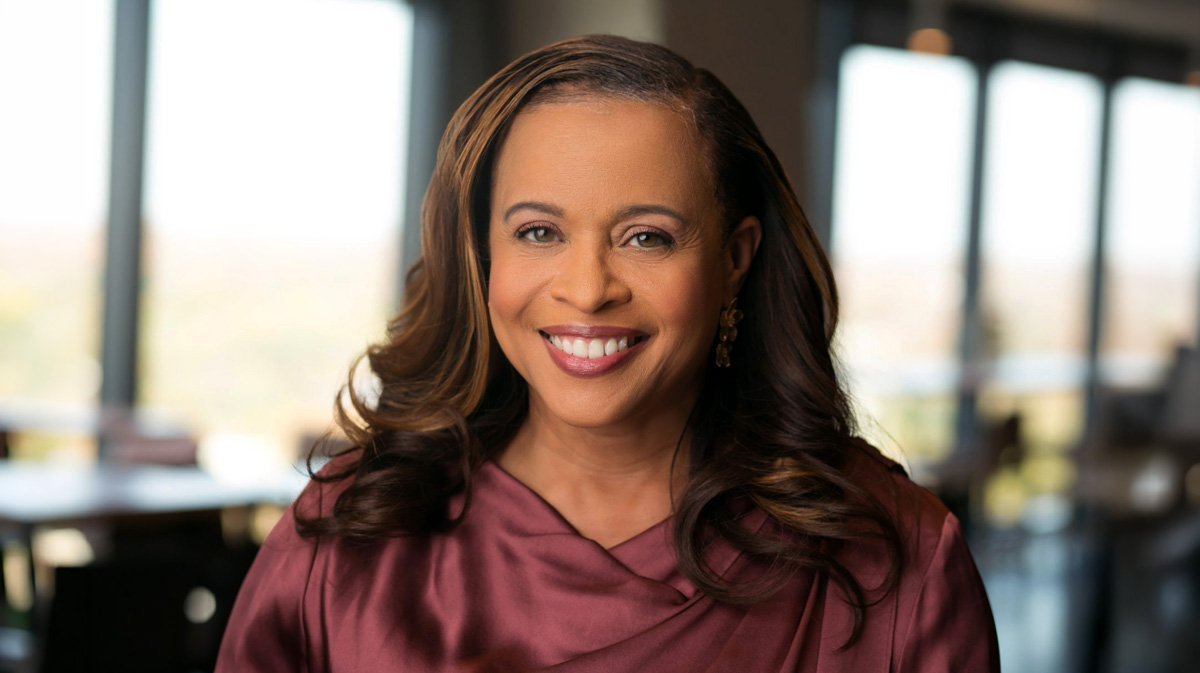
At fifteen, Melonie D. Parker took a job as a grocery store cashier, where speed and efficiency seemed like the only priorities. Lines stretched long, customers grew impatient, and the pressure to move quickly defined her early work experience.
One day, her manager offered a simple but transformative piece of advice: focus not on the line, but on the individual in front of her. He reminded her that every customer carried unseen burdens, and that empathy—not speed—was the real measure of service.
That moment stayed with Parker. It taught her the value of presence, of truly seeing people, and of tuning out distractions that pull attention away from what matters most. It became a principle she would carry into every stage of her career.
Years later, Parker would rise to a senior leadership role at Google, where she became responsible for shaping workplace culture for a massive global workforce. Her mission centered on fostering connection, engagement, and a sense of belonging across thousands of employees.
Colleagues, including Marian Croak, have praised her emotional intelligence and ability to balance compassion with business priorities. Parker’s leadership style reflects a deep understanding that people—not just performance—drive success.
Her journey, however, was not without challenges. As a first-generation college graduate, she had to navigate corporate environments without the benefit of inherited professional knowledge. Early on, she believed that hard work alone would guarantee advancement.
While working at Lockheed Martin, Parker focused intensely on performance, often declining networking opportunities. She saw them as distractions, not realizing that relationships were just as critical as results.
A turning point came when a manager encouraged her to engage more socially with colleagues. Attending a simple gathering helped her build trust and connection, opening her eyes to the power of community within the workplace.
From that moment forward, Parker embraced a broader view of leadership. She began to see that success involves not just individual contribution, but also how one connects, collaborates, and uplifts others.
Over time, she developed a guiding philosophy: “Add in, don’t fit in.” Rather than conforming to existing norms, she encouraged people to bring their unique strengths and perspectives into their work environments.
Her career continued to expand through leadership roles at Sandia National Laboratories and eventually back to Google, where she refined her approach to culture-building through data, listening, and continuous improvement.
Parker also advocates for work-life integration over rigid balance, recognizing that modern life requires flexibility. Drawing from her own experiences as a working parent, she emphasizes designing systems that allow people to thrive both personally and professionally.
At the core of her message is a call to action: step into the arena, take risks, and embrace growth. Inspired by Theodore Roosevelt, she believes that meaningful achievement comes not from observation, but from participation—and from having the courage to lead with both strength and empathy.
Business
Ambition, Tension, and Artificial Futures
The atmosphere inside the company had shifted, with some employees quietly expressing disappointment over a major missed opportunity.
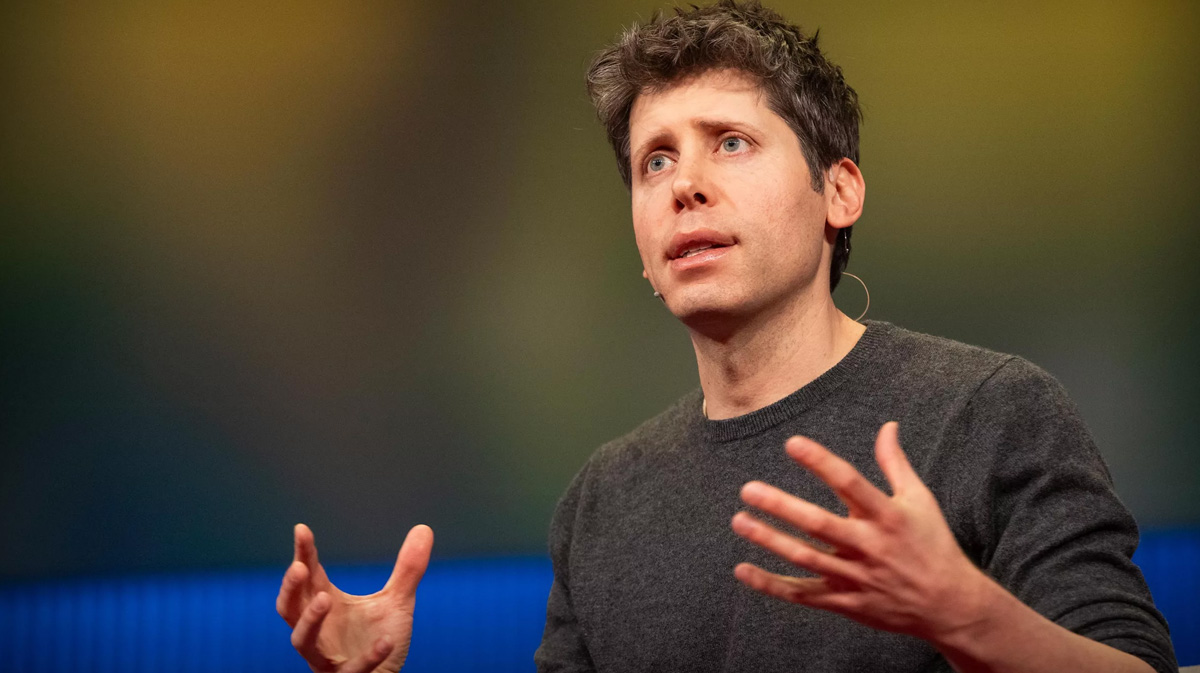
The atmosphere inside the company had shifted, with some employees quietly expressing disappointment over a major missed opportunity. Many had expected a key partnership to solidify their leadership position, only to see it go in a different direction. The decision caught insiders off guard and raised questions about how secure their advantage really was
Engineers who had been close to the project described the moment as unsettling. What once seemed guaranteed suddenly dissolved, leaving behind a mix of frustration and disbelief. For many, it was not just about losing a deal, but about losing momentum in a fiercely competitive field.
Despite this, leadership maintained a strong outward focus. The company’s chief remained fully committed to the long-term vision of artificial general intelligence, often referred to as AGI. This concept, while widely discussed, remains loosely defined and open to interpretation.
In moments of bold confidence, he suggested that the organization had already come close to achieving this ambitious goal. Such statements energized some supporters while raising skepticism among others. The gap between aspiration and measurable reality became a point of debate.
Industry peers were quick to respond with caution. Some leaders emphasized that the journey toward true AGI is far from complete. They pointed out that progress, while impressive, does not yet meet the threshold of human-level general intelligence.
Even among collaborators, there exists a sense of competitive tension. Partnerships in the AI world are rarely straightforward, often blending cooperation with rivalry. This dynamic creates a landscape where allies can simultaneously be competitors.
Shortly after his bold remarks, the CEO offered clarification. He explained that his earlier statement was meant more as a philosophical perspective than a literal claim. The distinction helped soften criticism while still reinforcing his optimism.
He acknowledged that reaching AGI will likely require a series of steady advancements rather than one singular breakthrough. This more measured view aligns with how many experts see technological progress unfolding. Incremental innovation, rather than sudden leaps, may define the path forward.
Those who know him well admit that his thinking can be difficult to interpret. Even close mentors sometimes struggle to fully understand his motivations. His decision-making often reflects a mix of intuition, ambition, and long-term vision.
One area where this is especially evident is in his aggressive approach to scaling infrastructure. His plans to invest vast sums into computing resources have drawn both admiration and criticism. Supporters see foresight, while skeptics question the financial realism.
From his perspective, the scale of investment is not only justified but necessary. He believes that the demand for AI capabilities will grow exponentially, requiring unprecedented levels of computing power. In his view, failing to prepare would be a far greater risk.
At the same time, he admits that balancing visionary thinking with practical constraints is not always his strength. The tension between ambition and feasibility is a recurring theme in his leadership style. It reflects the broader challenges facing the AI industry.
Looking ahead, his ideas about the future of leadership are equally unconventional. He has suggested that, one day, an advanced AI system could take over the management of the company itself. This concept challenges traditional notions of control and authority.
He appears open to stepping aside if such a future becomes reality. Rather than resisting the idea, he frames it as a logical extension of the technology’s purpose. If AI can outperform humans in complex tasks, leadership may be one of them.
As for his own future, he expresses a sense of completion. Many of his original goals, he feels, have already been achieved. Beyond that, he remains curious about what new forms of work might emerge in a world transformed by advanced intelligence.
Business
Curl Fest is Back
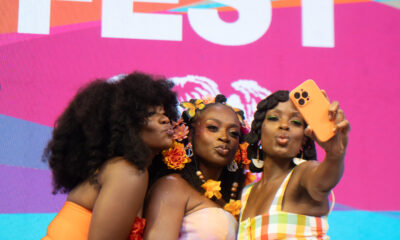
CURLFEST 2026 is officially confirmed to return on July 25, 2026, marking a highly anticipated comeback for one of the most influential celebrations of Black beauty, culture, and natural hair in the world.
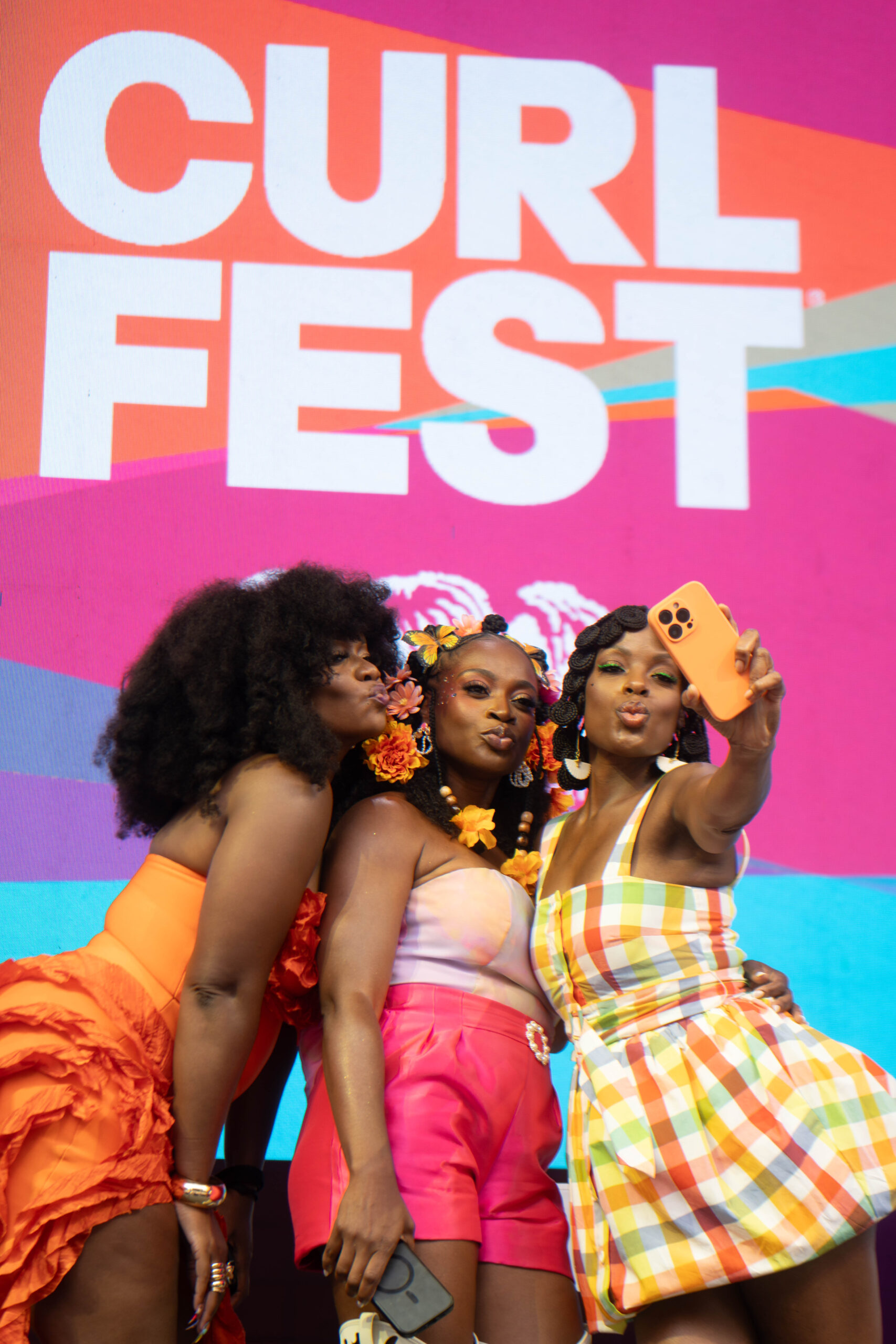
CURLFEST 2026 is officially confirmed to return on July 25, 2026, marking a highly anticipated comeback for one of the most influential celebrations of Black beauty, culture, and natural hair in the world. Organized by the Curly Girl Collective, the festival’s return signals not just another event on the summer calendar, but a meaningful reunion for a global community that has long embraced CURLFEST as a cultural home.
After a strategic hiatus focused on rebuilding and reimagining the experience, CURLFEST is back with renewed purpose and energy. The pause allowed organizers to reflect, recalibrate, and ensure that the festival returns stronger, more intentional, and more aligned with the needs of the community it serves. This return feels less like a restart and more like a powerful continuation of a legacy.
Presale tickets for the New York City event are already live, signaling strong anticipation from longtime supporters and first-time attendees alike. For many, securing a ticket early is not just about access, but about affirming support for a Black-female-owned and operated platform that has consistently centered authenticity and representation.
True to its roots, CURLFEST 2026 continues its tradition as a community-driven celebration rather than a conventional beauty festival. It invites attendees to “show up, show out,” a phrase that has become both a call to self-expression and a reminder that natural beauty deserves visibility, pride, and joy in public spaces.
Set to take place in New York, the city where CURLFEST has built much of its cultural momentum, the festival once again positions NYC as a hub for creative expression, cultural exchange, and Black-owned innovation. The city’s energy and diversity have long mirrored the spirit of CURLFEST itself, making it a fitting backdrop for the event’s return.
At its core, CURLFEST is about more than hair. While natural textures and styles remain central, the festival also celebrates music, art, wellness, entrepreneurship, and cultural storytelling. It is a space where beauty is defined broadly, intentionally, and on the community’s own terms.
As the world’s largest natural beauty festival, CURLFEST has consistently set the standard for what inclusive, culturally rooted events can look like. Its scale is impressive, but its impact is even greater, shaping conversations around beauty standards, representation, and ownership within the industry.
Sponsorship and partnership opportunities for CURLFEST 2026 are currently open, inviting brands and organizations to align with a platform that prioritizes authenticity and community engagement. These partnerships are not merely transactional, but collaborative, built around shared values and long-term cultural impact.
For emerging brands, creators, and entrepreneurs, CURLFEST has historically served as a launchpad, offering visibility and access to an engaged and loyal audience. The festival’s return restores an important ecosystem where Black-owned businesses can thrive and be celebrated on a global stage.
The Curly Girl Collective’s leadership remains central to the festival’s identity. As a Black-female-owned and operated organization, their vision ensures that CURLFEST remains accountable to the community it represents, resisting trends while staying culturally relevant and forward-thinking.
CURLFEST 2026 also arrives at a moment when conversations around equity, self-definition, and cultural preservation remain urgent. The festival’s presence reinforces the idea that celebration itself can be a form of resistance and healing, especially when rooted in collective pride.
With July 25, 2026 circled on calendars and presale tickets already moving, CURLFEST’s return stands as a powerful reminder of what happens when community, culture, and creativity come together. More than an event, CURLFEST 2026 represents a reaffirmation of identity, joy, and the enduring power of showing up exactly as you are.
For many attendees, CURLFEST is a reunion that transcends geography. People travel from across the country and around the world to be present, turning the festival into a pilgrimage of sorts where shared experience and cultural pride meet in one vibrant space.
The festival grounds often transform into a living gallery of style and self-expression. Hairstyles become statements, outfits become art, and every attendee contributes to the visual tapestry that defines the day. It is a celebration where individuality becomes collective beauty.
Music has always played an essential role in the CURLFEST experience. Live DJs, performances, and curated soundtracks help set the mood, turning the festival into an immersive cultural celebration that engages all the senses.
Wellness activations and panel conversations add depth to the day’s festivities. From mental health discussions to beauty workshops, CURLFEST creates space for learning, reflection, and empowerment alongside celebration.
Vendors line the festival with products that reflect innovation and care within the natural beauty space. Attendees are able to discover new brands, reconnect with favorites, and directly support Black-owned businesses in a tangible way.
Photographers and content creators often find CURLFEST to be a visual dream. The colors, textures, and energy of the crowd provide endless inspiration, further extending the festival’s cultural reach through social media and digital storytelling.
Families, friends, and solo attendees all find belonging at CURLFEST. The atmosphere is welcoming and affirming, creating an environment where people of all ages can feel seen and celebrated.
Over the years, CURLFEST has influenced the broader beauty industry, encouraging brands and media platforms to expand their definitions of beauty and representation. Its cultural impact continues long after the festival day ends.
The return in 2026 feels especially meaningful because it reflects resilience. It demonstrates the Curly Girl Collective’s commitment to sustaining a platform that serves its community with intention and care.
As anticipation builds, social media buzz and word-of-mouth excitement continue to grow. The countdown to July 25 has already begun, and the energy surrounding the festival’s comeback is palpable.
Ultimately, CURLFEST 2026 is not just a date or a destination. It is a celebration of identity, creativity, and cultural pride that invites everyone to participate in the joy of showing up fully and unapologetically.
In many ways, CURLFEST acts as a living timeline of how natural beauty culture has evolved over the years. Attendees can trace shifts in style, language, and expression simply by observing the crowd, making the festival a reflection of both history and progress in real time.
The sense of pride that fills the space is contagious. Even passersby and first-time visitors quickly feel the warmth and vibrancy that define the event, often leaving with a newfound appreciation for the culture being celebrated.
CURLFEST also fosters meaningful face-to-face connections in an increasingly digital world. Online communities finally meet offline, turning social media interactions into real-life friendships, collaborations, and support networks.
For many entrepreneurs, the festival offers invaluable direct feedback from customers. Conversations at vendor booths often shape future product launches, marketing approaches, and brand storytelling in authentic and community-informed ways.
The visual storytelling that emerges from the festival frequently influences how media outlets cover beauty and culture throughout the year. Editors and creatives often look to CURLFEST imagery as a benchmark for authentic representation.
Attendees often arrive early and stay late, wanting to take in every moment of the experience. The day unfolds at a pace that encourages lingering, exploring, and truly being present rather than rushing from one activity to the next.
The diversity of curl patterns, skin tones, fashion choices, and personal styles on display reinforces the message that there is no single way to be beautiful. This visual diversity becomes one of the festival’s most powerful statements.
CURLFEST’s return in 2026 also highlights the importance of spaces intentionally created for joy. In a world where many gatherings are transactional or commercial, the festival prioritizes celebration, connection, and cultural affirmation.
For longtime supporters, seeing the festival return after its hiatus carries an emotional weight. It feels like reconnecting with an old friend whose presence has been deeply missed and warmly welcomed back.
As the festival approaches, the collective excitement serves as a reminder that CURLFEST is not only an event to attend, but an experience to feel, remember, and carry forward as a source of pride, inspiration, and community.CURLFEST 2026 is officially confirmed to return on July 25, 2026, marking a highly anticipated comeback for one of the most influential celebrations of Black beauty, culture, and natural hair in the world. Organized by the Curly Girl Collective, the festival’s return signals not just another event on the summer calendar, but a meaningful reunion for a global community that has long embraced CURLFEST as a cultural home.
After a strategic hiatus focused on rebuilding and reimagining the experience, CURLFEST is back with renewed purpose and energy. The pause allowed organizers to reflect, recalibrate, and ensure that the festival returns stronger, more intentional, and more aligned with the needs of the community it serves. This return feels less like a restart and more like a powerful continuation of a legacy.
Presale tickets for the New York City event are already live, signaling strong anticipation from longtime supporters and first-time attendees alike. For many, securing a ticket early is not just about access, but about affirming support for a Black-female-owned and operated platform that has consistently centered authenticity and representation.
True to its roots, CURLFEST 2026 continues its tradition as a community-driven celebration rather than a conventional beauty festival. It invites attendees to “show up, show out,” a phrase that has become both a call to self-expression and a reminder that natural beauty deserves visibility, pride, and joy in public spaces.
Set to take place in New York, the city where CURLFEST has built much of its cultural momentum, the festival once again positions NYC as a hub for creative expression, cultural exchange, and Black-owned innovation. The city’s energy and diversity have long mirrored the spirit of CURLFEST itself, making it a fitting backdrop for the event’s return.
At its core, CURLFEST is about more than hair. While natural textures and styles remain central, the festival also celebrates music, art, wellness, entrepreneurship, and cultural storytelling. It is a space where beauty is defined broadly, intentionally, and on the community’s own terms.
As the world’s largest natural beauty festival, CURLFEST has consistently set the standard for what inclusive, culturally rooted events can look like. Its scale is impressive, but its impact is even greater, shaping conversations around beauty standards, representation, and ownership within the industry.
Sponsorship and partnership opportunities for CURLFEST 2026 are currently open, inviting brands and organizations to align with a platform that prioritizes authenticity and community engagement. These partnerships are not merely transactional, but collaborative, built around shared values and long-term cultural impact.
For emerging brands, creators, and entrepreneurs, CURLFEST has historically served as a launchpad, offering visibility and access to an engaged and loyal audience. The festival’s return restores an important ecosystem where Black-owned businesses can thrive and be celebrated on a global stage.
The Curly Girl Collective’s leadership remains central to the festival’s identity. As a Black-female-owned and operated organization, their vision ensures that CURLFEST remains accountable to the community it represents, resisting trends while staying culturally relevant and forward-thinking.
CURLFEST 2026 also arrives at a moment when conversations around equity, self-definition, and cultural preservation remain urgent. The festival’s presence reinforces the idea that celebration itself can be a form of resistance and healing, especially when rooted in collective pride.
With July 25, 2026 circled on calendars and presale tickets already moving, CURLFEST’s return stands as a powerful reminder of what happens when community, culture, and creativity come together. More than an event, CURLFEST 2026 represents a reaffirmation of identity, joy, and the enduring power of showing up exactly as you are.
For many attendees, CURLFEST is a reunion that transcends geography. People travel from across the country and around the world to be present, turning the festival into a pilgrimage of sorts where shared experience and cultural pride meet in one vibrant space.
The festival grounds often transform into a living gallery of style and self-expression. Hairstyles become statements, outfits become art, and every attendee contributes to the visual tapestry that defines the day. It is a celebration where individuality becomes collective beauty.
Music has always played an essential role in the CURLFEST experience. Live DJs, performances, and curated soundtracks help set the mood, turning the festival into an immersive cultural celebration that engages all the senses.
Wellness activations and panel conversations add depth to the day’s festivities. From mental health discussions to beauty workshops, CURLFEST creates space for learning, reflection, and empowerment alongside celebration.
Vendors line the festival with products that reflect innovation and care within the natural beauty space. Attendees are able to discover new brands, reconnect with favorites, and directly support Black-owned businesses in a tangible way.
Photographers and content creators often find CURLFEST to be a visual dream. The colors, textures, and energy of the crowd provide endless inspiration, further extending the festival’s cultural reach through social media and digital storytelling.
Families, friends, and solo attendees all find belonging at CURLFEST. The atmosphere is welcoming and affirming, creating an environment where people of all ages can feel seen and celebrated.
Over the years, CURLFEST has influenced the broader beauty industry, encouraging brands and media platforms to expand their definitions of beauty and representation. Its cultural impact continues long after the festival day ends.
“Duis aute irure dolor in reprehenderit in voluptate velit esse cillum dolore eu fugiat”
The return in 2026 feels especially meaningful because it reflects resilience. It demonstrates the Curly Girl Collective’s commitment to sustaining a platform that serves its community with intention and care.
As anticipation builds, social media buzz and word-of-mouth excitement continue to grow. The countdown to July 25 has already begun, and the energy surrounding the festival’s comeback is palpable.
Ultimately, CURLFEST 2026 is not just a date or a destination. It is a celebration of identity, creativity, and cultural pride that invites everyone to participate in the joy of showing up fully and unapologetically.
In many ways, CURLFEST acts as a living timeline of how natural beauty culture has evolved over the years. Attendees can trace shifts in style, language, and expression simply by observing the crowd, making the festival a reflection of both history and progress in real time.
The sense of pride that fills the space is contagious. Even passersby and first-time visitors quickly feel the warmth and vibrancy that define the event, often leaving with a newfound appreciation for the culture being celebrated.
CURLFEST also fosters meaningful face-to-face connections in an increasingly digital world. Online communities finally meet offline, turning social media interactions into real-life friendships, collaborations, and support networks.
For many entrepreneurs, the festival offers invaluable direct feedback from customers. Conversations at vendor booths often shape future product launches, marketing approaches, and brand storytelling in authentic and community-informed ways.
The visual storytelling that emerges from the festival frequently influences how media outlets cover beauty and culture throughout the year. Editors and creatives often look to CURLFEST imagery as a benchmark for authentic representation.
Attendees often arrive early and stay late, wanting to take in every moment of the experience. The day unfolds at a pace that encourages lingering, exploring, and truly being present rather than rushing from one activity to the next.
The diversity of curl patterns, skin tones, fashion choices, and personal styles on display reinforces the message that there is no single way to be beautiful. This visual diversity becomes one of the festival’s most powerful statements.
CURLFEST’s return in 2026 also highlights the importance of spaces intentionally created for joy. In a world where many gatherings are transactional or commercial, the festival prioritizes celebration, connection, and cultural affirmation.
For longtime supporters, seeing the festival return after its hiatus carries an emotional weight. It feels like reconnecting with an old friend whose presence has been deeply missed and warmly welcomed back.
As the festival approaches, the collective excitement serves as a reminder that CURLFEST is not only an event to attend, but an experience to feel, remember, and carry forward as a source of pride, inspiration, and community.
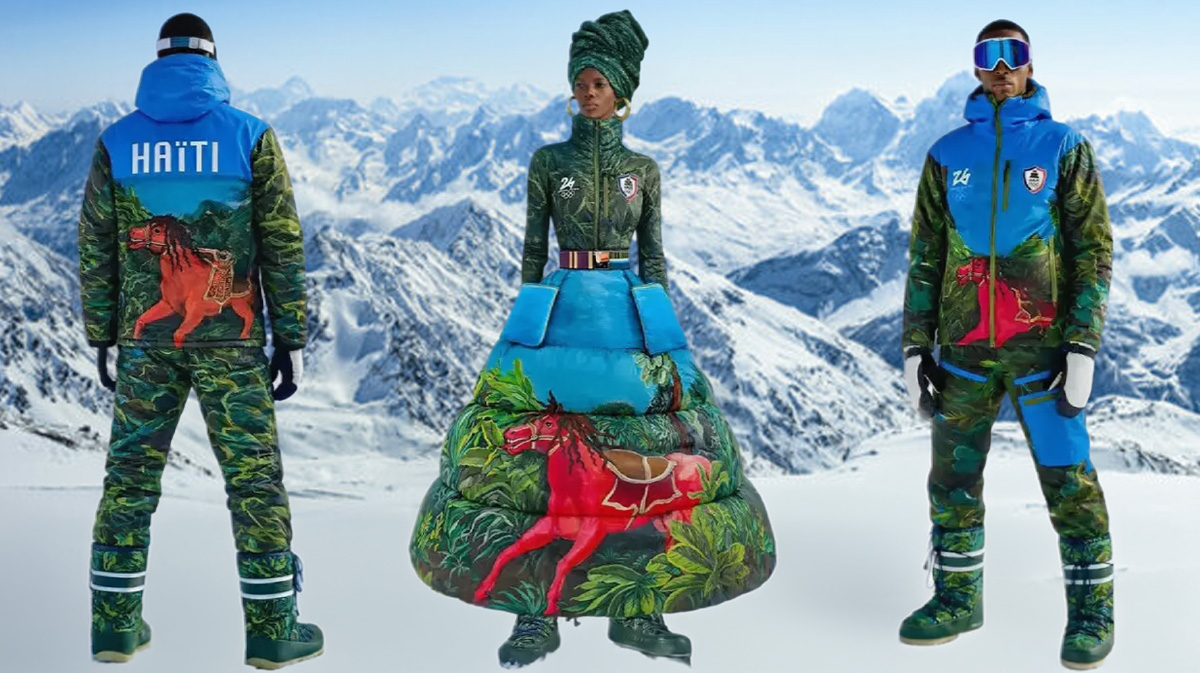
Haiti’s small Winter Olympic delegation arrived in Milan with a visual statement that far exceeded its size, turning the opening ceremony into a runway for national identity. The country’s two athletes stepped out in outfits that instantly cut through the sea of parkas and uniforms, asserting that visibility itself is a form of power.
Their uniforms were conceived by Stella Jean, a Haitian-Italian designer whose work often braids politics, history and craft into fashion. For these Games, she used the Olympic spotlight to carry Haiti’s story into a space where the country is rarely seen, especially in winter sports.
The garments center on hand-painted imagery that pulls from Haitian art and landscape, transforming technical ski wear into moving canvases. Lush foliage, open sky and a vivid red horse wrap around the bodies of the athletes, making them look less like competitors in transit and more like protagonists in a living mural.
That horse refers to a painting by Haitian artist Edouard Duval-Carrié, in which revolutionary leader Toussaint Louverture rides a red steed toward freedom. Olympic rules barred a literal depiction of Louverture, so Jean let the animal stand in for him, turning a single motif into a quiet but unmistakable nod to Haiti’s fight for independence.
The silhouettes blend performance gear with ceremonial elements: trousers and a zip-front jacket are paired with a quilted puffer skirt for the woman in the group. The pieces were refined with input from former ski champion Pietro Vitalini, ensuring that symbolism did not come at the expense of function in the cold.
Crowns of cloth complete the story in the form of the tignon, a traditional Haitian head wrap loaded with meaning. Once imposed as a marker of difference and control, it is reimagined here as a sign of dignity and defiance, turning the athletes’ heads into visible declarations of self-respect.
The overall effect is both precise and romantic, like a fairy tale rewritten to center Caribbean protagonists on Alpine snow. The looks suggest what it might mean for Cinderella to trade a crystal slipper for sturdy boots and still keep every bit of her magic intact.
This is not Jean’s first time treating the Olympics as a cultural archive, rather than a mere dress code. Her uniforms for Haiti at the 2024 Paris Games, equally steeped in symbolism, were later acquired by the Olympic museum in Lausanne, signaling that these clothes are already being preserved as part of sports history.
“Crowns of cloth complete the story in the form of the tignon, a traditional Haitian head wrap loaded with meaning.”
For Haiti, insisting on presence at a winter competition is itself a kind of refusal. The country’s representatives made clear that they do not accept the idea that geography or climate should dictate where they belong in the global imagination.
A statement from Gandy Thomas, Haiti’s ambassador to Italy, underscores that intent, framing participation as a bulwark against being written out of the story. He describes absence as a dangerous form of erasure and positions showing up—visibly, beautifully—as an act of resistance.
In that light, the opening ceremony outfits operate as more than coordinated uniforms. They function as moving arguments for Haiti’s continued relevance, insisting that the nation will not be confined to headlines about crisis or to stereotypes about tropical sport.
As the athletes circled the stadium, their clothes made it impossible to overlook them, even in one of the smallest contingents in the parade. Fashion, in this case, becomes both spotlight and shield, allowing Haiti to step onto the ice-cold stage of the Winter Games entirely on its own terms.

Roots Of Defiant African Resistance

A Voice Rising With Purpose

Poetry At The Cosmic Edge



-
 Sports9 months ago
Grace, Grit, Gold on Ice
-

 Entertainment8 months ago
Serena Williams Super Bowl LX Commercial ‘Healthier on Ro’
-

 Fashion8 months ago
The Face That Redefined Beauty
-
 Business8 months ago
Curl Fest is Back
-

 Culture7 months ago
The Return of Chrisette Michele
-
 Culture8 months ago
Patterns of Systemic Black Destabilization
-
 Business9 years ago
Charles White: Art and Human Dignity
-
 Fashion7 months ago
Bold Spatial Vision